OECD Podcasts
OECD Podcasts feature insightful interviews with experts and well-known personalities on pressing global challenges such as inequality, inclusive growth, the economy, jobs, digital transformation, climate change, environment, education, healthcare, tax, trade, and international co-operation. The podcast aims to explore how policies can be shaped for better lives, drawing on the expertise of the Organisation for Economic Co-operation and Development. Episodes cover a wide range of topics relevant to OECD member countries and beyond.
Épisodes
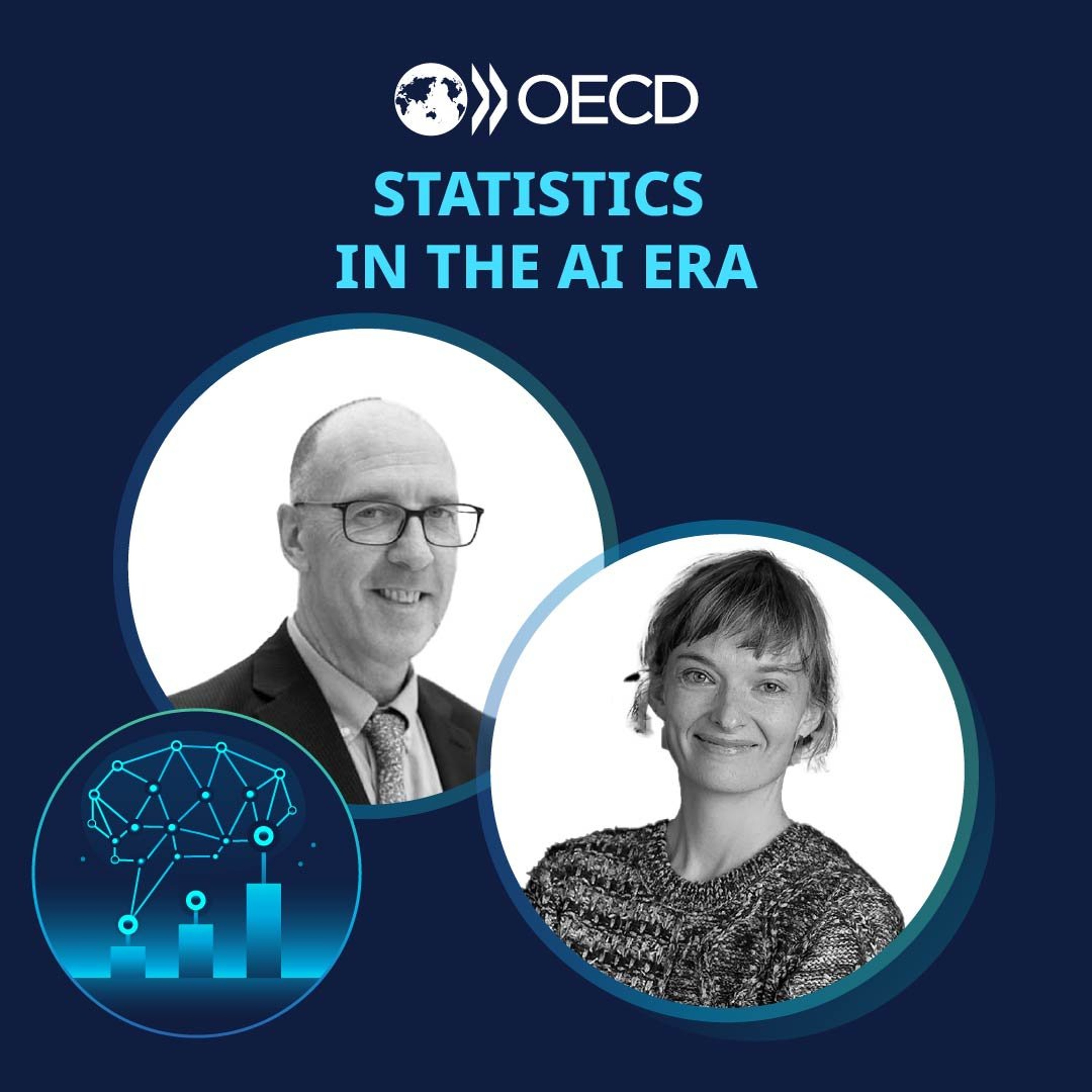
Governing AI in the Public Sector with NY State's Chief AI Officer Eleonore Fournier-Tombs
Governments are moving from discussing artificial intelligence to deploying it. But what does responsible AI look like when it is used inside large public administrations, across real services, using real people’s information?
In Episode 3 of Statistics in the AI Era, OECD Chief Statistician Steve MacFeely speaks with New York State Chief AI Officer Eleonore Fournier-Tombs, about the practical wo
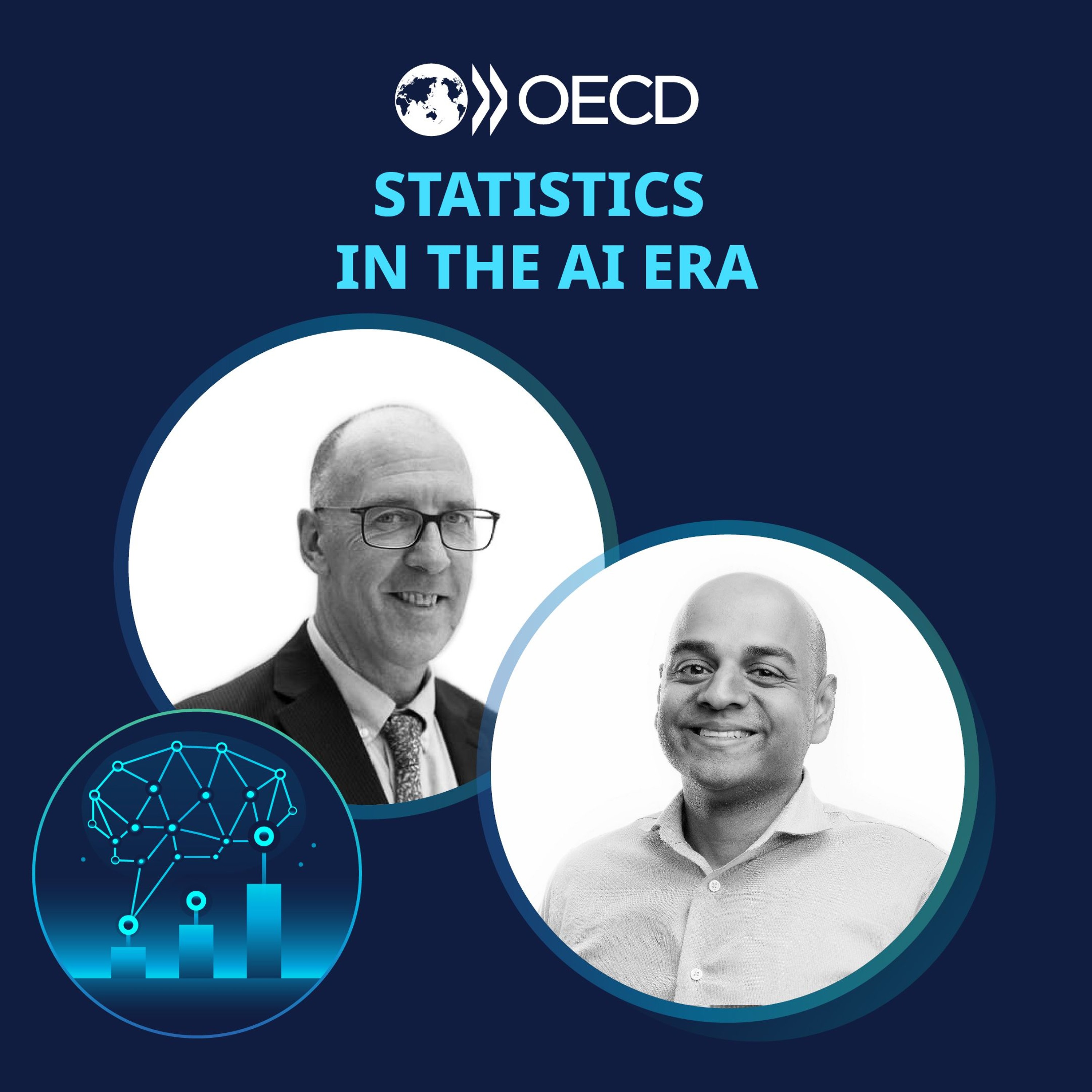
Making good data easier to find and use with Google's Prem Ramaswami
As AI assistants, search engines and chatbots become intermediaries between users and information, official statistics face a new usability test: can authoritative public data be found, understood, sourced and used correctly by both humans and machines?
In the second episode of Statistics in the AI Era, OECD Chief Statistician Steve MacFeely speaks with Prem Ramaswami, Head of Google Data Commons
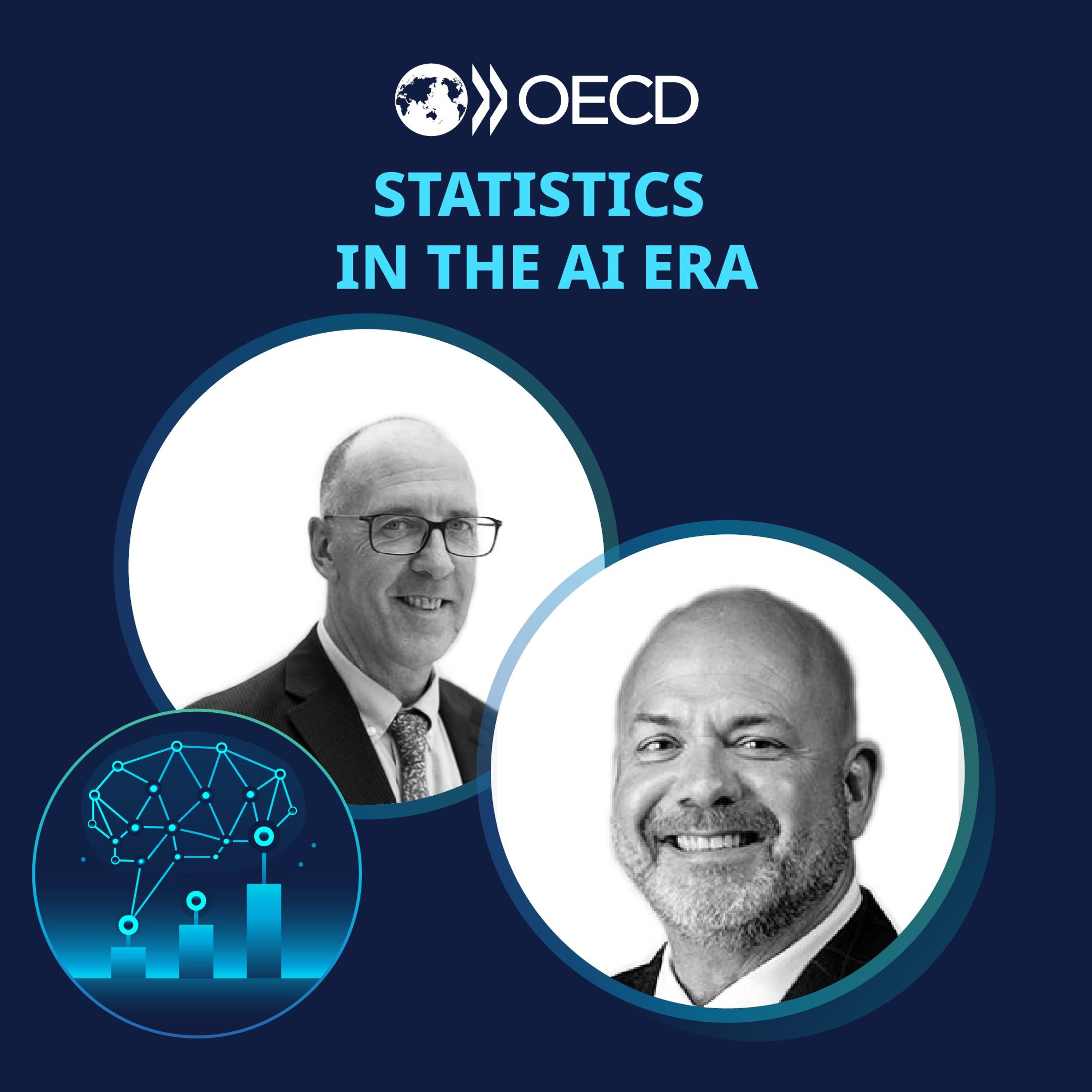
AI and the future of official statistics with André Loranger - Chief Statistician of Canada
AI is changing how citizens, journalists and policymakers find facts. Instead of going directly to statistical databases, more users are turning to AI assistants and chatbots to retrieve, interpret and reference official statistics.
In this first episode of Statistics in the AI Era, OECD Chief Statistician Steve MacFeely speaks with André Loranger, Chief Statistician of Canada and head of Statist
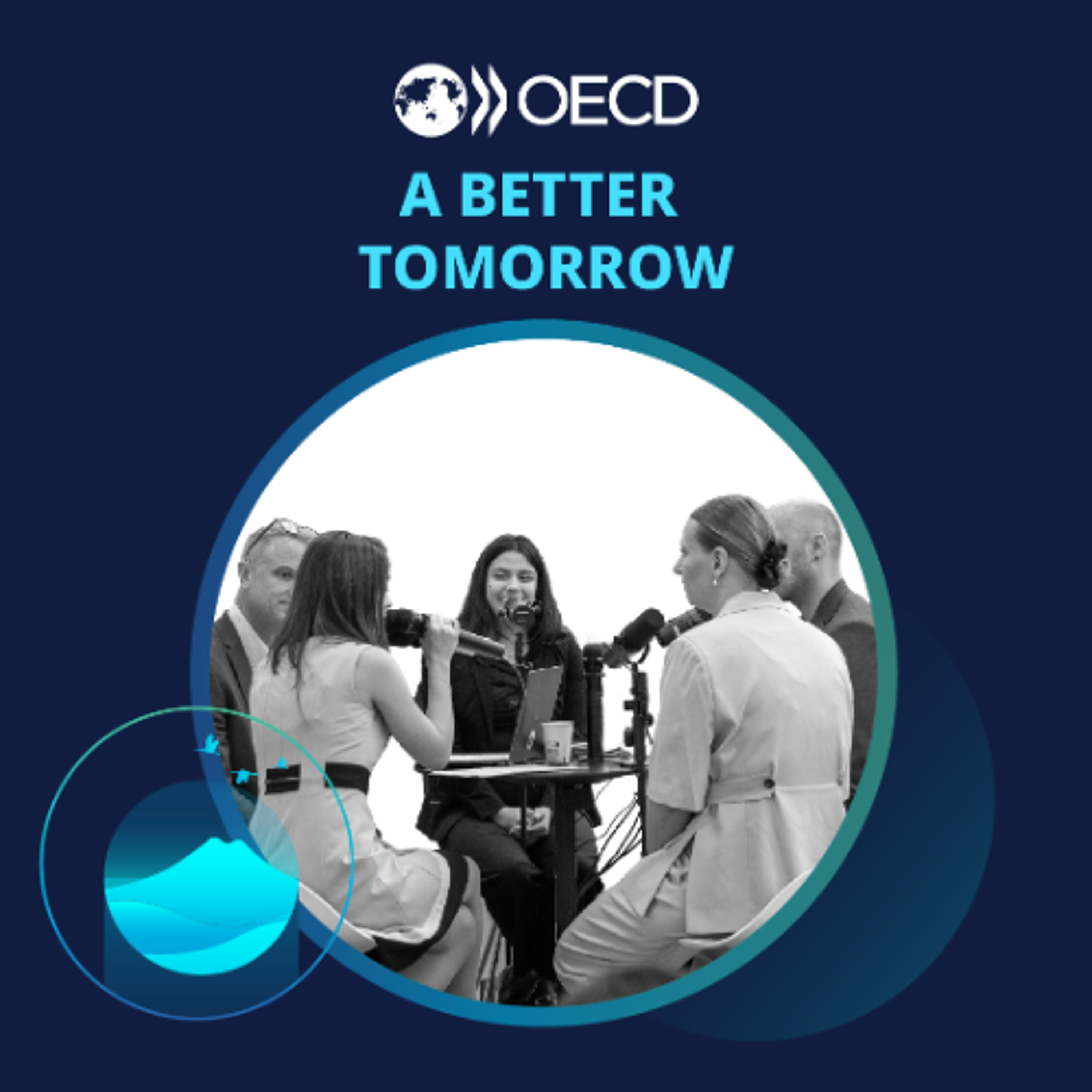
AI in small businesses: hype, hope or hard reality?
Recorded live for the first time at the 7th Digital for SMEs (D4SME) Roundtable, this special episode is hosted by Shayne MacLachlan and Alix Philouze. While 61% of SMEs report using AI, three quarters remain beginners, highlighting a gap between adoption and confidence. Joined by entrepreneurs Regitze Vestergaard Jacobsen, Robyn Baker and Leonardo Baggiani, the discussion explores how small busin
Fuel, fear and flights: How the tourism sector learned to withstand global shocks
Over the 10 years, global tourism has been reshaped by successive crises, from the collapse of travel during COVID-19, the Russia-Ukraine war, and the current conflict in the Gulf and the rise of petrol prices. In this episode, Shayne MacLachlan from the OECD, speaks with Sergio Guerreiro, Chair of the OECD Tourism Committee, about how governments have responded to uncertainty and what resilience
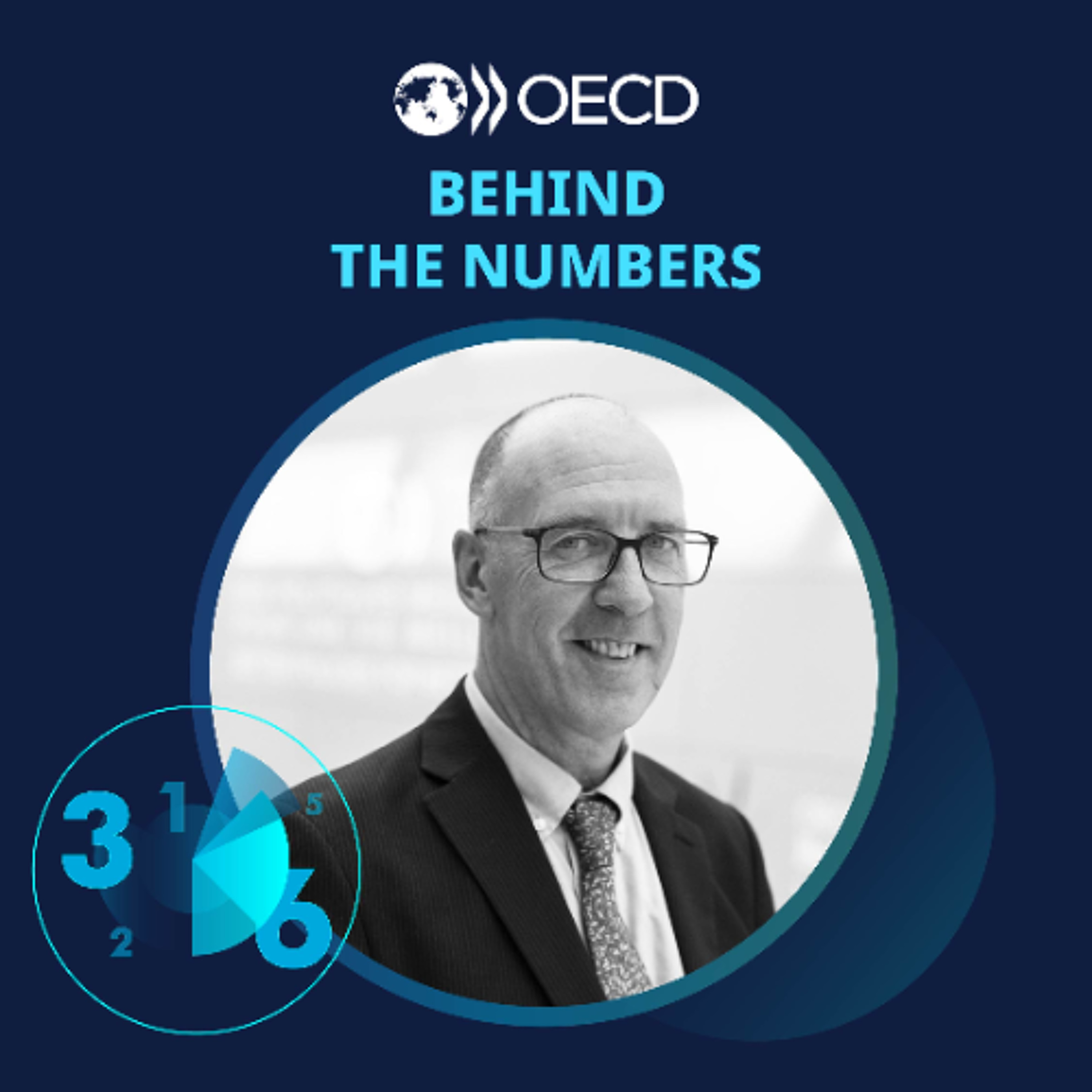
Life, the universe and Data Governance with OECD Chief Statistician Steve MacFeely
Data is the lifeblood of the modern economy - powering decision-making, daily life, and the AI revolution. But governing data is full of trade-offs: openness and trust vs privacy and regulation; cross-border sharing vs sovereignty; and timeliness vs quality.
In this episode of Behind the Numbers, host Ashley Ward is joined by OECD Chief Statistician Steve MacFeely to explore why data governance
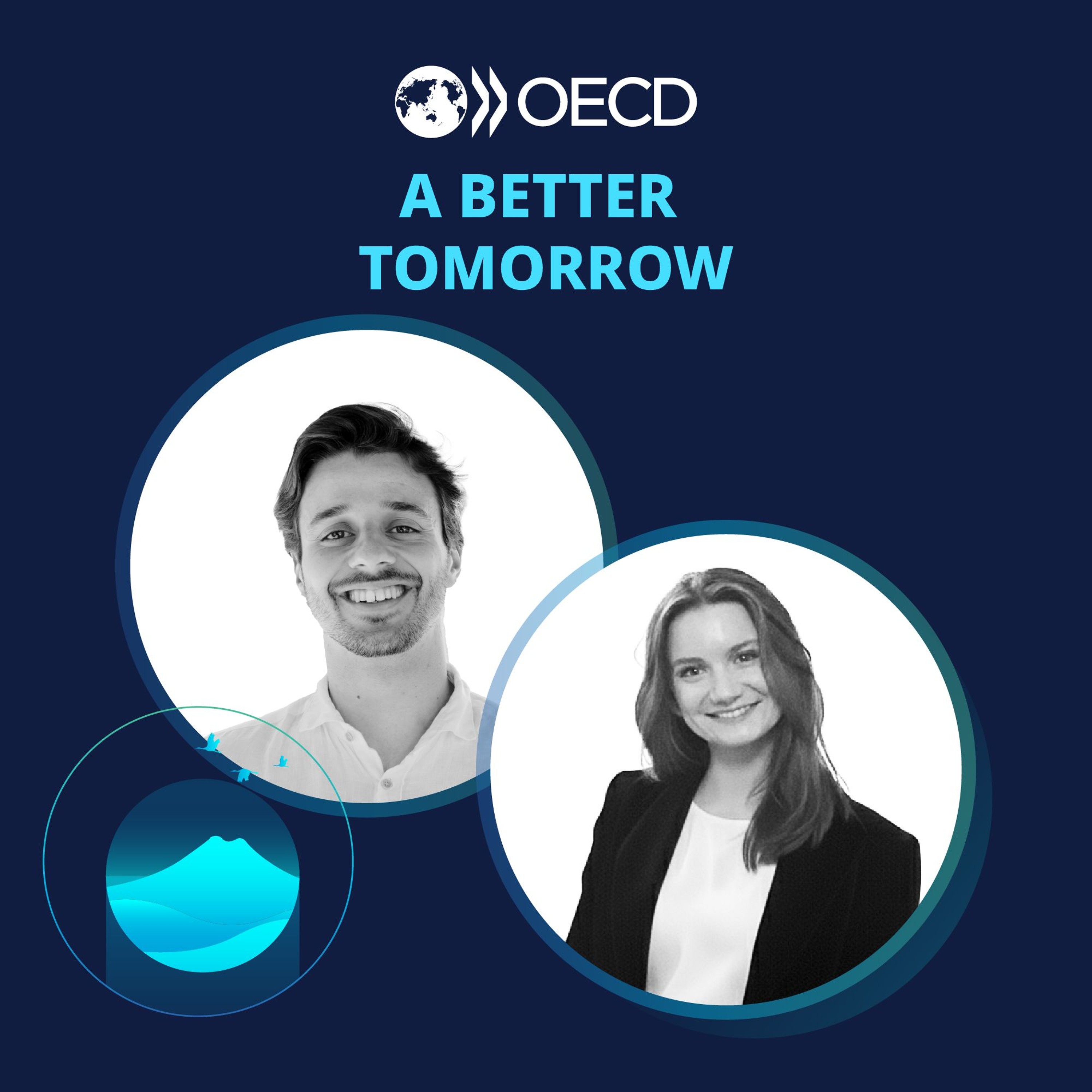
Labels matter: Putting people over profit
With hundreds of sustainability and impact labels in circulation, how can consumers, policymakers and investors identify organisations that really do put people over profit? And why does it matter for the social economy?
In this episode of Cogito Talks, Shayne MacLachlan is joined by Ruben Rebelo from the European Commission and Sofija Rakcejeva from the OECD to explore how labels can do more tha
COGITO Talks… What in the World is the Tropical Economy?
Imagine a world where rural and tropical regions aren’t struggling backwaters, but breeding ground for fresh ideas, new jobs and sustainable growth. According to OECD’s Rural Innovation Pathways, rural innovation isn’t just a smaller copy of what happens in cities, it’s different: rooted in community‑led projects, adaptive agriculture, renewable energy, social enterprises and creative responses to
COGITO Talks… Click, Vote, Grow: How India is 'rural proofing' its future
India's rural areas are developing at an extraordinary rate, and it poses both challenges and extraordinary opportunities to rethink development at a large scale. Across the OECD, over nine in ten households are now connected to the Internet, but in rural regions connectivity still lags behind, with only about 89% of rural households having even a basic broadband connection. https://www.oecd.org/e
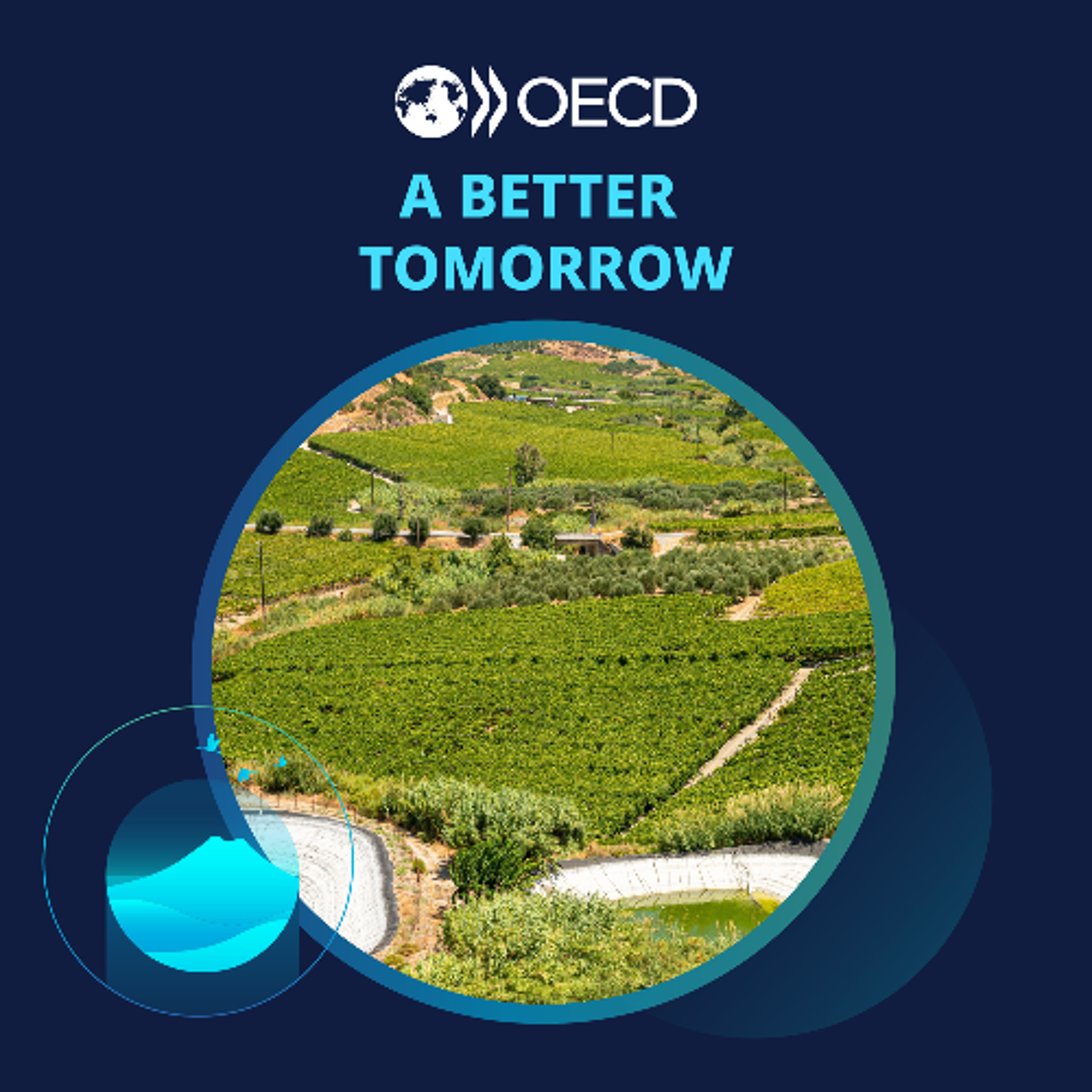
COGITO Talks… Lean on Me: Three pillars for rural prosperity
The OECD Report for Regional Policy for Greece Post-2020 (https://www.oecd.org/en/publications/regional-policy-for-greece-post-2020_cedf09a5-en.html) revealed that 32% of the population lives in predominantly rural regions which is significantly higher than the OECD average share of rural population which is around 25%. Of those living in predominantly rural regions (~3.4 million people), roughly
COGITO Talks… From vanishing villages to vital visions: The future of rural Kazakhstan
Rural populations are shrinking. In 11 of the 29 OECD countries included in the OECD Reinforcing Rural Resilience report (https://www.oecd.org/en/publications/reinforcing-rural-resilience_7cd485e3-en.html), rural populations are declining, not only as percentage of national populations but also in absolute numbers. Rural regions close to cities are also exposed to this trend, particularly if their
COGITO Talks… Roots of Wisdom: Indigenous Perspectives for Policy Makers
The 2025 OECD Report Reinforcing Rural Resilience reveals that OECD regions have seen a significant loss of forests, with approximately 10% of their forest cover disappearing between 2000 and 2020. This decline is driven by a combination of factors, including land conversion for agriculture, urban expansion, and the increasing demand for natural resources. Some countries and regions have experienc
COGITO Talks… La République des Hyper Voisins
Recent OECD data show that around one in ten people across member countries have no one they can rely on in times of need, underscoring the growing urgency of loneliness and social isolation. In today’s episode, we explore how one Parisian neighbourhood has decided to push back through the creation of a vibrant community movement that’s reshaping daily life.
Recorded with Patrick Bernard founder
Youth entrepreneurs uncovered: Dare to dream...YEPA panel special
Recent OECD data shows that less than 40% of young people aged 18 to 30 feel they have the skills and experience needed to start a business. https://www.oecd.org/content/dam/oecd/en/publications/reports/2019/12/the-missing-entrepreneurs-2019_668840b2/3ed84801-en.pdf In today’s episode, you’ll not only hear inspiring stories about young people who have turned their enterpreneurial dreams into reali
Youth entrepreneurs uncovered: Joni Rakipi, in his own words
Even though 40% of young people would prefer to be self-employed, the reality does not match their aspirations. If young people were as active in entrepreneurship as 30- to 49-year-old men, there would be an additional 3.6 million more young entrepreneurs across OECD countries.
This episode of OECD podcast features Joni Rakipi from ETH Zürich and is hosted by Shayne MacLachlan from the CFE. Joni
Youth entrepreneurs uncovered: Elina Cohen-Peirano, in her own words
Even though 40% of young people would prefer to be self-employed, the reality does not match their aspirations. If young people were as active in entrepreneurship as 30- to 49-year-old men, there would be an additional 3.6 million more young entrepreneurs across OECD countries. In this episode of OECD podcasts, Alix Philouze chats to Elina Cohen-Peirano, CEO & founder of URONE and a young entrepre
Hope or hype: Can social innovation really deliver?
How can we turn great ideas into lasting social impact? In this episode of the OECD Podcast, Shayne MacLachlan speaks with Jeroen Jutte, Head of the European Social Fund Coordination Unit at the European Commission. They explore how the EU is using its flagship funding instrument to support and scale social innovation—from pilot projects in disadvantaged communities to multi-country initiatives re
Does healthcare deliver for patients? Insights from OECD’s PaRIS initiative
For far too long, healthcare performance indicators have centred on inputs—like funding and infrastructure—or processes—like hospital admissions or waiting times—without adequately capturing the experiences and outcomes of the people receiving care.
The OECD’s PaRIS Survey upends that dynamic, shining a light on how older people with chronic conditions feel about their care, how healthy they rea
From the 15-minute city to the 30-minute region: Rethinking how we live and connect
What happens when we flip the urban planning script — putting people, not cars, at the heart of our cities and regions? In this 15-minute episode, Professor Carlos Moreno - creator of the “15-minute city” and now a leading voice behind the “30-minute region” - joins the OECD’s Soo-Jin Kim to explore how we can build more inclusive, connected and resilient places.
From the sidewalks of Paris to ru
Power Shift: When First Nations Lead the Future
What happens when First Nations take the lead in shaping the future of clean energy and infrastructure in Indigenous communities? In this episode, we hear from Mark Podlasly, CEO of the First Nations Major Projects Coalition (FNMPC) and member of the Nlaka’pamux Nation in British Columbia. He speaks with Sinead Teevan from the OECD about how the coalition is helping First Nations secure ownership
Winners without medals: The legacy of volunteers
Volunteers are the beating heart of any event, from the Olympics to your local school sports day. But beyond the medals and podiums, what impact does volunteering have on individuals, communities, and the broader economy?
In this episode, we speak to Max Jablonowski and Betty Anne Bryce, who volunteered at the Paris 2024 Olympic and Paralympic Games. They share their behind-the-scenes experiences
Can you handle the truth? Putting misinformation to the test with the OECD Truth Quest Survey
On a daily basis, we’re faced with a deluge of online content, only swelling further with the mainstreaming of generative AI and rising political polarisation. Improving our joint understanding of how people consume news, and how effectively they distinguish between fact and fiction, is one of the key challenges of our time.
The OECD Truth Quest Survey implements an innovative methodology to an
L’emploi à l’ère de l’IA générative—une opportunité pour tous et partout ? – avec Eric Pérès
L’intelligence artificielle générative transforme rapidement les marchés du travail, notamment à l’échelle locale. Elle aide à combler les pénuries de main d'œuvre et renforce la productivité. Mais elle creuse aussi la fracture numérique entre les zones urbaines et rurales.
Dans cet épisode des Podcasts de l'OCDE, Pauline Arbel et Karen Maguire accueillent Eric Pérès, le Secrétaire général de F
Why are health statistics some of the OECD’s most popular indicators?
The COVID-19 pandemic brought health statistics into the spotlight, from tracking excess mortality to understanding the financial impact on healthcare systems. But health statistics are just as vital today as they were during the pandemic.
In this episode of Behind the Numbers, Ashley Ward is joined by OECD Head of Health Accounts David Morgan and Policy Analyst Gabriel di Paolantonio to discuss h
Better data for better policies: inequality and the digital economy
How does the richest group of households in a country compare to the poorest? How can we expose the growing importance of the digital economy, often hidden in macroeconomic statistics?
These questions are at the centre of upcoming updates to the System of National Accounts (SNA), which aim to provide policymakers with the information required to better understand the distribution of income, cons
Decoding GDP: How to measure pastries, pencils, and pyjamas
Most people know Gross Domestic Product (GDP) as the go to number to evaluate an economy's performance. It is often referenced in the news, sometimes directly, other times implied in discussions of economic recession, recovery or boom. But other indicators, further removed from the limelight, are also vital for economic analysis: for example, Household Disposable Income (HDI) helps us to monitor c
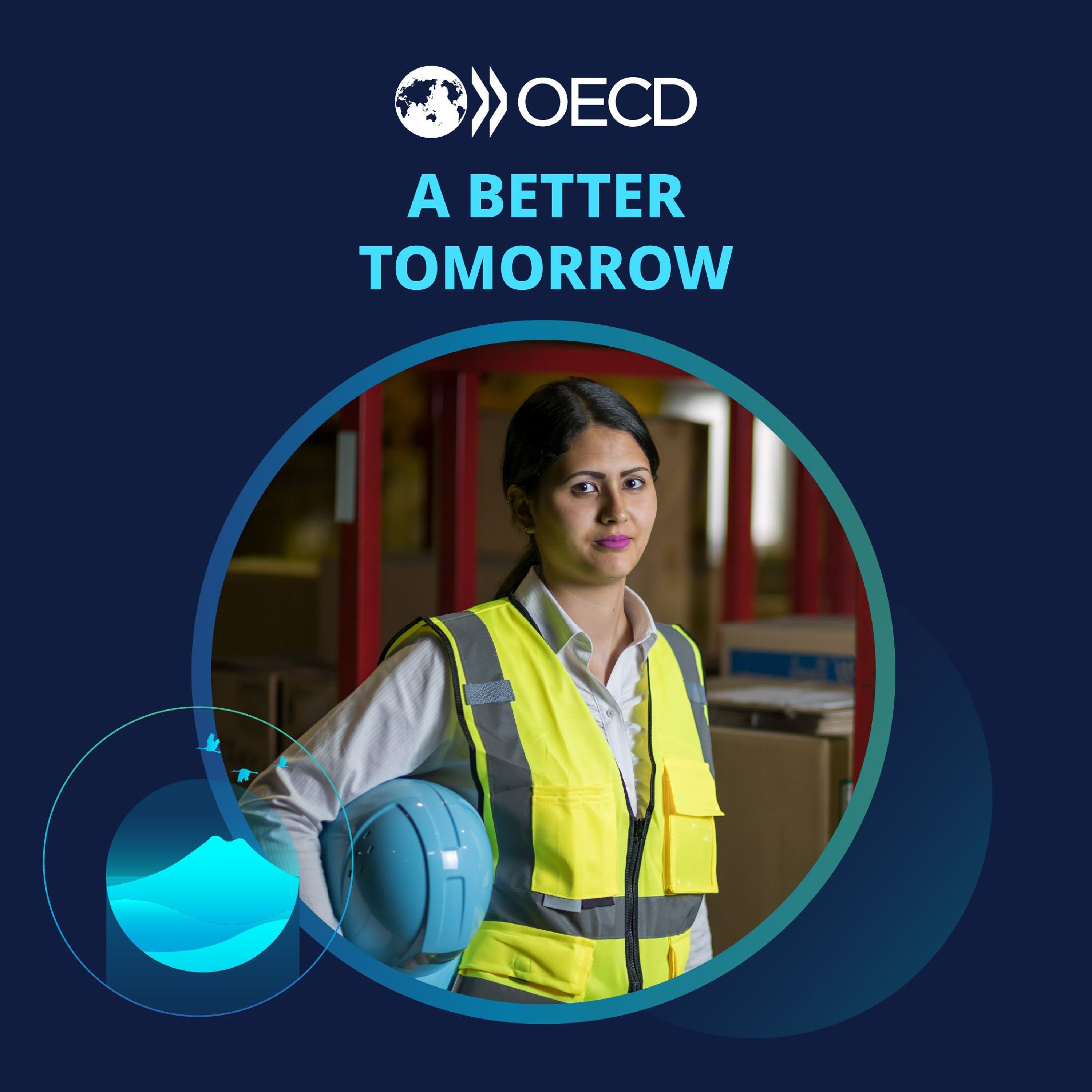
Breaking barriers to the labour market for women with Yalla Trappen
Guest: Frida Grundhal, Project Co-ordinator, Yalla Trappan.
In this edition of OECD Podcasts, Katrina Baker and Shayne MacLachlan are Joined by Frida Grundahl from Yalla Trappen; a groundbreaking social enterprise dedicated to creating job opportunities and fostering financial independence for Sweden’s foreign-born women. Statistically, foreign-born women are said to be one of the most distant fro
Shaping tomorrow’s cities with Urban Partners
In this edition of OECD Podcasts, Shayne MacLachlan from the OECD Centre of Entrepreneurship, SMEs, Regions and Cities is joined by Jesse Shapins from Urban Partners. Together they discuss how Urban Partners’ involvement in projects on local, municipal and national levels can help to achieve climate action and social sustainability.
In their conversation, they cover the concept of green and thriv
Young entrepreneurs: Money, mindset and motivation
Young entrepreneurs have a huge role to play as slow productivity growth, climate change, demographic change and the digital transition come together in a perfect storm for many economies. The new OECD-EU “Missing Entrepreneurs” report finds that if youth (18-29 years old) participated in early-stage entrepreneurship at the same rate as “core age” men (30-49 years old), there would be an additiona
Can the social economy help refugees access jobs?
According to the UN Refugee Agency, more than 100 million people were forcibly displaced in 2022. With Russia's war of aggression against Ukraine, Europe has seen the biggest refugee crisis since the Second World War with more than 6 million people fleeing Ukraine. This is a big challenge for refugee protection and reception systems. Clearly something public services cannot stem on their own. This
Why digitalising procurement systems is the way forward
Digitalisation in procurement comes with a variety of opportunities, but also challenges. Can digital resources such as artificial intelligence, e-procurement and data systems improve the ways governments obtain services and goods? This podcast is the third and final episode of a series in collaboration with the MAPS Initiative, Methodology for Assessing Procurement Systems. Edwin Lau, OECD, Head
Chief Heat Officers take on deadly heat waves in Athens and Santiago
As urban heat waves become more frequent and severe, meet the leaders on the frontlines of responding to extreme heat in cities. The Chief Heat Officers for Santiago, Chile, and Athens, Greece, discuss their innovative strategies to spread awareness of the dangers of heat, keep vulnerable residents safe in scorching temperatures, and create more green spaces to cool their cities down.
Guests: Cr
Cooling the concrete jungle: How can cities beat extreme heat?
Extreme heat is creating major challenges for cities. The urban “heat island” effect traps cities in a bubble of scorching temperatures, which endangers lives and puts pressure on emergency services and infrastructure. Often the poorest neighbourhoods bear the worst consequences of rising heat waves. Andrew Lombardi discusses how heat exacerbates inequalities in cities and breaks down what cities
Sustainable public procurement in the midst of the climate crisis
In 2015, the United Nations released the Sustainable Development Goals to help create a more sustainable and equitable world. The 17 goals included procurement systems, calling governments to procure in a more sustainable manner. But how does this actually work? How can governments include sustainability in their procurement systems? And can sustainable public procurement help mitigate the climate
Multinational enterprises demystified using open-source data
Over the past few decades, as trade and investment barriers have lessened, and transport and communication costs have declined, multinational enterprises or MNEs have become an increasingly important fixture in the global economy. As these entities begin to represent a larger share of global economic activity, the importance of monitoring them and understanding their behaviour has never been great
The MAPS Initiative and why procurement matters
When governments need to buy anything from office supplies to infrastructure, the process is more complex than your ordinary shopping trip. How do we know that governments are using good judgement when purchasing items or awarding contracts? Who advises governments on these processes to ensure that they are transparent, efficient, and cost effective? That's where MAPS, the methodology for assessin
Retaining Talent of All Ages, with Shruti Singh and Lona Choi-Allum
Retaining talent of all ages has become one of the most important issues facing employers today. How are people 55 to 64 faring in today’s labour market and how can we build an effective, multi-generational workforce? The OECD’s Shruti Singh and AARP’s Lona Choi-Allum explore what needs to be done to ensure that everyone's talents and skills are put to best use.
Guests: Lona Choi-Allum, Senior R
Protéger l’environnement est possible, rentable et enthousiasmant ! Entretien avec Bertrand Piccard
Bertrand Piccard est un « savanturier » psychiatre et explorateur. Il a fait le premier tour du monde en ballon en 1999, puis en avion solaire avec l'avion Solar Impulse en 2015-2016. En tant que Président de la Fondation Solar Impulse, il est aussi un « explorateur de solutions » face au plus grand défi de notre temps : le changement climatique. Après avoir survolé la terre, il travaille à sa sau
Richard Reeves on improving the well-being of men and boys
Is the current state of the modern man something to be concerned about? Does childhood well-being vary greatly between boys and girls? This podcast explores those questions and more with Richard Reeves, author of "Of Men and Boys Why the Modern Male is Struggling, Why It Matters and What to Do About It" and Olivier Thevenon, OECD economist and the Observatory on Well-Being, Inclusion, Sustainabili
Garantir le meilleur départ possible dans la vie: quels enjeux en matière de bien-être de l’enfant ?
L'Enfance est une période critique au cours de laquelle les individus développent un grand nombre de compétences nécessaires pour s'épanouir plus tard dans la vie. La promotion du bien-être des enfants n'est pas seulement une fin importante en soi, mais elle est également essentielle afin de préserver la prospérité et la soutenabilité de l'économie pour les générations futures. Cependant, le bien-
Pink collar jobs: new shades for the social economy
The social economy can help boost prospects for women… and men. One of the big problems in tackling gender equality is breaking down gender stereotypes that drive women into what have often been called “pink collar jobs”. These are jobs like childcare, education, personal and household services, plus social work. Nitya Nangalia from SEWA Bharat and Natalie Laechelt from the OECD unpack the role of
From raising awareness to changing policies: The OECD’s Digital Security Recommendations explained
As technology continues to advance, we're more connected than ever. But with more benefits also come more risks. How can we ensure that we are protected from digital threats? In December 2022, the OECD released its Digital Security Recommendations to help keep individuals, businesses and governments secure online. Audrey Plonk, head of Digital Economy Policy division for the OECD's Science, Techno
OECD Podcasts 2022 Year in Review
In 2022, OECD Podcasts did not shy away from the hard issues plaguing society today. Misinformation, domestic violence and burnout are only a few of the topics discussed this year with a variety of experts. Let's take a listen to some of the best podcast interviews done this year that you may have missed.
Host: Robin Allison Davis
Producer: Samia Basille
Guests: Margaret Johnston Clarke, Ingrid
How to make supply chains more resilient with the OECD’s Marion Jansen
The last two years have seen unprecedented disruptions in global supply chains, brought about by a perfect storm of causes, with wide geopolitical implications that look to continue well into the future. How prepared were the public and private sectors? And what have we learned? We speak with Marion Jansen on how to make supply chains more resilient.
Host: Christopher Mooney
Guest: Marion Jansen

Are we there yet? Taking tourism forward… it’s complicated
For almost three years now, the tourism sector has been going through a really tough time. It was smashed by the COVID-19 pandemic and travel restrictions. After hitting 1.5 billion international tourist arrivals in 2019, international tourist arrivals worldwide plummeted by over 70%. It rebounded strongly in 2022 driven by pent up demand, household savings and the easing of travel restrictions –
Young and yern? You need to start a social enterprise
Young people are increasingly prioritising careers with positive social and environmental impacts. Globally, two-in-five young people see social impact as one of the deciding factors for their career choices.
At the same time, almost 50% of young people in OECD countries would prefer to be self- employed rather than work as employees.
Young people are seizing opportunities and leading social e
Understanding Social Mobility and Equal Opportunity
Inequalities not only affect our lives, but also the lives of our children in generations after us. How can we ensure that our children have more opportunities than we have, that generations after us are rising in society and not limited by sticky floors? Romina Boarini, director of the OECD Centre on Well-Being, Inclusion, Sustainability and Equal Opportunity, helps us understand social mobility,
Strengthening Democracy: Gearing up Governments to Tackle Mis- and Disinformation
Misinformation and disinformation have become some of the biggest threats to democracy in the 21st century. It's everywhere from stories of election fraud to vaccines. How can we combat misinformation and disinformation while still protecting freedom of speech? What can governments do to curb myths and disinformation? This podcast is the second in a series on Reinforcing Democracy in partnership w
Accounting for the environment: Better data for a better future
With temperatures rising and natural disasters occurring more frequently, the climate crisis is on everyone's minds. Countries have come together in an effort to address climate change via international cooperation. However, the climate crisis is worsening. Calls for concrete policy action are deafening; but to generate world class policy advice, we need world class evidence. The OECD compiles and
Time to act: Nurturing our democracies for the 21st century
For a country to take on the most critical problems of our day, like climate change, it needs its people to be engaged and committed. Yet, as countries recover from the biggest health, economic and social crisis in decades, the trust citizens have in their government is under strain. How can this trust be won back? What drives public trust? How can policymakers build people's confidence in their g
Governing data and AI for all: which model for a sustainable and just data governance?
While the European Union is developing the Data Act, the Data Governance Act and the Artificial Intelligence (AI) Act, the issue of the data governance remains at the fore. In today’s podcast, we will try to answer some of these questions: What are the policy options for Europe’s data governance framework, especially with regard to AI, that align with a data justice perspective? How to foster a po
Transition Finance: what is it and why is it needed?
Global environmental emergencies such as climate change call for us to put our money where our mouth is. An increasing number of governments, companies and financial institutions have committed to reach net zero emissions by 2050. Is that enough to help us meet the goal of the Paris Agreement of limiting the average global temperature increase to 1.5 °C? If not, what more can be done to bridge thi
Sécheresse historique : Que faire ?
La planète est aujourd’hui en proie à des sécheresses dévastatrices. L'été 2022 a été décrit comme une saison en enfer, avec un changement climatique qui est devenu très concret : on a pu constater l’assèchement des cours d’eau et les ravages de très violents feux de forêt. Un rapport publié en août 2022 par l'Observatoire européen de la sécheresse indiquait que près des deux tiers du territoire e
Today’s historic drought calls for historic policy solutions
The world is suffering from a devastating drought. According to an August report from the European Drought Observatory, nearly two-thirds of European territory is either experiencing drought or on high alert, due to stifling heatwaves and minimal rainfall. The consequences are far-reaching: electricity production, crop yields, and inland shipping are just a few of the sectors being hit, as wildfir
Worn out: COVID-19, Women and the Great Exhaustion
It’s been a tough two years for women. Early in the COVID-19 pandemic, women were hit harder by job losses, leading many to call it a “she-cession”. But as the pandemic worse on we started to see wider impacts too. We saw women on the front line of the crisis response, making up 75% of the workforce in health and social care. Women were taking on more work at home due to school and childcare closu
The Artificial Intelligence Act: addressing the divergence between the public and private sectors
The European Parliament and Council are currently negotiating the Artificial Intelligence Act, which introduces common regulatory and legal framework for Artificial Intelligence (AI) in all domains except the military. However, the negotiations pose several challenges for legislators. How should the risk categories be established? Do they take into account unintended impacts of AI? What divergence
Creative Re-construction: a comeback for culture in the COVID-19 recovery?
Cultural and creative sectors have been profoundly impacted by the COVID-19 pandemic. The overall contribution to global gross value added (GVA) of the sector fell by around 21% between 2019-20. 10 million jobs were lost worldwide in these industries. However, the impact of the pandemic has been uneven. Businesses with strong digital content have done very well, such as the gaming and music stream
Will the science of co-operation help us solve climate change?
Lower your thermostat and bring a reusable bag. Commute by bicycle and recycle. These are all everyday life actions, promoted to help the climate change crisis. But how is it decided what changes we should make in our lives? How easily do people change their behaviour? Can it actually make a difference? Understanding human behaviour works hand-in-hand with climate change policy and we're speaking
AI is poised to revolutionise healthcare. Building trust will be key.
Artificial intelligence played a pivotal role during the COVID-19 pandemic, from hastening diagnoses to supporting contract tracing and more. In this sense, the pandemic has already shown us how A.I. can benefit healthcare. But this seems just the beginning of revolution. What else can be done? What are the limits and risks of using artificial intelligence in health care? And how can we best ensur
Don’t blame victims, focus on perpetrators: Making services work for domestic violence survivors
James Henderson was 10 years old when he experienced how policies designed with the best intentions can have devastating effects for families affected by domestic violence. He tells OECD’s Monika Queisser about his personal journey from surviving family abuse to becoming a Social Worker, Probation Officer, Battering Intervention Provider and Expert Trainer on Tackling Domestic Violence. He explain
Trusted statistics and the impact of digitalisation, with OECD Chief Statistician Paul Schreyer
Everyone relies on data and statistics for making decisions in everyday life, whether at home or at work. Not having data would be like flying blind. But with so much information out there, how can we trust the numbers we read in the media or in official government sources, or for that matter, from the OECD? What are official statistics anyway, who produces them and what makes them so reliable? Do
The global implications of the Ukraine crisis, with Laurence Boone
Russia's late February invasion of Ukraine has unleashed a devastating and ongoing humanitarian crisis in Ukraine, with thousands of civilian deaths. At least four million Ukrainians have fled the country and nearly seven million are internally displaced. Beyond Ukraine, the conflict is upending the global economy, deepening pressure on vulnerable households still reeling from the pandemic. And wi
Eliminating the digital gender divide with Women in Tech's Ayumi Moore Aoki
The gender equality gap in the tech industry has worsened in the last 40 years.
How can we lessen this the divide and make the tech industry more welcoming for everyone? We speak with Ayumi Moore Aoki, founder of Women in Tech, a global organization aiming to eliminate the gender digital divide by helping women learn digital skills, get hired in tech jobs and become leaders in the tech industr
Women, climate change & data: why we need to better understand the environment-gender nexus
The data is clear: environmental degradation especially affects women, and women are more motivated to do something about it. Why is this so? Join us as we discuss the complex, multi-faceted relationship between women, climate change, air pollution, domestic violence, and green technology patents with Ingrid Barnsley, Deputy Director of the Environment Directorate at the OECD.
For more informati
Know Thy AI: Assessing the risks of Artificial Intelligence
AI is everywhere, bringing many benefits but also reinforcing unfairness, misinformation and privacy invasion. What steps need to be taken to keep these risks in check? We find these answers and more, in our conversations with Karine Perset, head of the AI unit of the OECD Division for Digital Economy Policy and the OECD Policy Observatory and Dr Sebastian Hallensleben, co-chair of the AI Classifi
When the only safe place is work: How employers can fight domestic violence
In this episode of Truth Hurts, Monika Queisser speaks with Margaret Johnston-Clarke, the Global Chief Diversity, Equity and Inclusion Officer for the L'Oréal Group, about actions employers can take. In the One in Three Women Network, multinational companies work together to support survivors amongst their own employees with concrete measures.
For more information and how to join the network, pl
OECD Podcasts 2021 Year in Review
This year OECD Podcasts brought you interviews with policymakers, OECD experts, academics and more, on the topics making headlines in the world today. Take a listen to hear snippets from some of our most listened to podcasts from 2021 as well as what you can expect from us in 2022.
Get the latest OECD content delivered directly to your inbox! Subscribe to our newsletters: www.oecd.org/newsletters
“Open for business?” How to create opportunities in entrepreneurship for everyone
Not everyone has an equal opportunity to transform their ideas into a business. There could be an additional 9 million people starting and managing new business in the European Union (EU) – and 35 million across OECD countries – if everyone was as active in business creation as core age men (30-49 years old). David Halabisky, Policy Analyst at the OECD Centre for Entrepreneurship and SMEs, Regions
A policeman’s journey to activism: Combatting violence against women
In this episode of Truth Hurts, Monika Queisser speaks with Bert Groen, a former police officer turned activist in the fight against gender-based violence in the Netherlands. He shares his experiences in dealing with violence against women, explains how the police force and the justice system more broadly can better help survivors of domestic violence, why it is so important to integrate all servi
Helping young people navigate the future of work
The OECD, in partnership with IBM, recently conducted a social media poll, asking young people about how well prepared they feel to join the world of work, how confident they are about their future paths and what concerns them about education and jobs in the wake of the COVID-19 pandemic. In this episode, the OECD’s Anthony Mann and IBM’s Lydia Logan discuss insights from the poll and why career g
Education equity and the lessons of the COVID-19 pandemic
The COVID-19 pandemic forced school closures in nearly all countries in 2020, with as much as 55 in-person learning days lost for young children and as many as 100 days lost for high school students. The impact of this disproportionately affected those from disadvantaged backgrounds, who were more likely to lack the resources for effective remote learning. The need to strengthen educational opport
Repenser l’équité dans l’éducation : Le COVID, révélateur et catalyseur ?
Depuis le début de la pandémie, les fermetures d’écoles ont été nombreuses à travers le monde : la scolarisation de plus d’un milliard d’élèves s’en est trouvée suspendue. Après 18 mois de pandémie, force est de constater que les élèves les plus défavorisés ont été les plus pénalisés. Où en sommes-nous ? Peut-on faire émerger quelque chose de positif de cette crise sans précédent ? Le COVID peut-i
Révolution dans la fiscalité internationale : la justice fiscale en action – avec Pascal Saint-Amans
Début juillet 2021, plus de 130 pays et juridictions sont parvenus à un accord sur une refonte radicale du système fiscal international. Cet accord vise à faire en sorte que les entreprises multinationales paient une juste part de l’impôt partout où elles exercent des activités. Il actualise des composantes fondamentales d’un système fiscal international presque centenaire qui n’est plus adapté à
Artificial Intelligence: Managing the ethical challenges
If a self-driving car gets into an accident, who’s to blame — the person in the car, or the technology powering the vehicle? What about the manufacturer? If an automated job-search tool discriminates based on race or gender, who’s at fault — the software, or the company? We look at the complex ethical challenges central to AI, the fundamental philosophical questions — about human’s relationship wi
Migrant integration: How Handbook Germany community builds to overcome barriers
Effective communication is key when it comes to helping migrants get to know their host country, integrate in their local communities and have access to essential public services. What are best practices in communication with migrants? How can communicators successfully establish interactive spaces online to respond to migrants’ information needs? And how can governments make sure to reach partic
Global digital tax deal: A multilateral solution to end corporate tax avoidance
Over 130 countries and jurisdictions, representing more than 90% of global GDP, joined a new agreement in July 2021 to reform the international taxation rules and ensure that multinational enterprises pay a fair share of tax wherever they operate. This global tax deal – the outcome of negotiations co-ordinated by the OECD for much of the last decade – updates key elements of the century-old intern
Truth Hurts: The unknown brain injuries of domestic violence survivors
Pioneering research is showing that brain trauma is pervasive in cases of domestic violence against women. Depression, anxiety, memory loss, disorientation, and sleep problems are all potential symptoms of someone who has experienced a traumatic brain injury. Recognising and treating brain injuries is key to help survivors of domestic violence. In the second episode of the OECD podcast series “Tr
Artificial Intelligence: Regulation Can Support Innovation
In April 2021, the European Union unveiled a proposal for unprecedented regulations on the use of AI technologies — with implications for companies, governments, and citizens alike. The tide seems to be shifting, with private companies facing increasing scrutiny. We will hear how regulation can promote innovation, and how citizens can be brought into the discussion.
This episode is the second in
Globalisation, prosperity and fairness: Lessons from Ireland
Promoting economic and social progress throughout the world has been the aim of the OECD since it opened in September 1961. One member country that has embodied this goal since the outset is Ireland. Its strong economic performances, the quality of life and its appeal to global investors are just some illustrations of this.
So, as we build the post-pandemic world, what lessons can we draw from I
Truth Hurts: Sheltering from domestic violence
Violence against women is one of the most widespread, persistent and devastating human rights violations in the world. More than one in three women worldwide say they experienced physical or sexual violence in their lifetime. The pandemic has made things worse: confinement trapped millions of women around the world at home with their abusers. In the first episode of the OECD podcast series “Truth