Women Leading Change (Sahel and West Africa Club OECD/SWAC)
Women Leading Change 35 épisodes juil. 22, 2025
This podcast comes from the Sahel and West Africa Club (SWAC) Secretariat, which is hosted at the Organisation for Economic Co-operation and Development (OECD). It focuses on promoting regional policies to improve economic and social well-being in the Sahel and West Africa. The show highlights women leading change and development across the region. It offers perspectives on regional cooperation and policy issues.
Épisodes

Politiques et vécu : comment ancrer l’action publique dans les réalités des femmes africaines ?
Dans cet épisode, Françoise Moudouthe partage sa vision d’un féminisme profondément enraciné dans les réalités vécues des femmes africaines. Elle revient sur les défis d’accès aux ressources pour les organisations féministes, les limites des politiques étrangères dites féministes, et l’importance de la sororité comme moteur d’action collective. Elle souligne surtout l’écart entre les récits vécus

Comment les politiques de commerce alimentaire peuvent-elles mieux soutenir les femmes?
Les femmes jouent un rôle essentiel dans le commerce alimentaire en Afrique de l’Ouest, mais elles font face à des obstacles qui limitent leurs opportunités et contributions. Dans cet épisode, Halatou Dem, directrice des Céréales de Tatam au Mali, explique les défis auxquels les femmes font face tels que l’accès limité au crédit, à l’information et aux réseaux, les normes sociales restrictives et

Quelle place pour les femmes dans les processus de paix, de sécurité et de développement au Sahel ?
Dans cet épisode de la série Les femmes agentes de changement, Salimata Nébié Conombo — ancienne ministre du Genre du Burkina Faso et experte en problématiques de paix et sécurité — revient sur ses années d'engagement aux côtés des femmes touchées par les conflits. Elle partage avec force son expérience et illustre le rôle clé des femmes comme actrices économiques, son combat pour intégrer les vio

Bâtir une ville résiliente : Nouakchott face aux défis climatiques
Entre l’océan et le désert, Nouakchott affronte de plein fouet les effets du changement climatique, tels que inondations et vagues de chaleur, tout en faisant face aux défis de l’urbanisation rapide. Dans cet épisode de la série Les femmes, agentes de changement, Madame Fatimetou Abdel Malick, présidente du Conseil régional de Nouakchott, partage sa vision pour bâtir une ville plus résiliente, inc

Paix sans elles : Pourquoi les femmes sont-elles encore exclues des négociations ?
Malgré des engagements internationaux, la participation des femmes aux processus de paix reste insuffisante. Quels sont les obstacles qui entravent leur implication ? Dans cet épisode, Madame Achta Djibrine Sy, ancienne ministre de la Culture et de la Promotion de la Diversité, analyse les barrières socioculturelles et politiques qui freinent l’accès des femmes aux sphères de décision. Elle partag
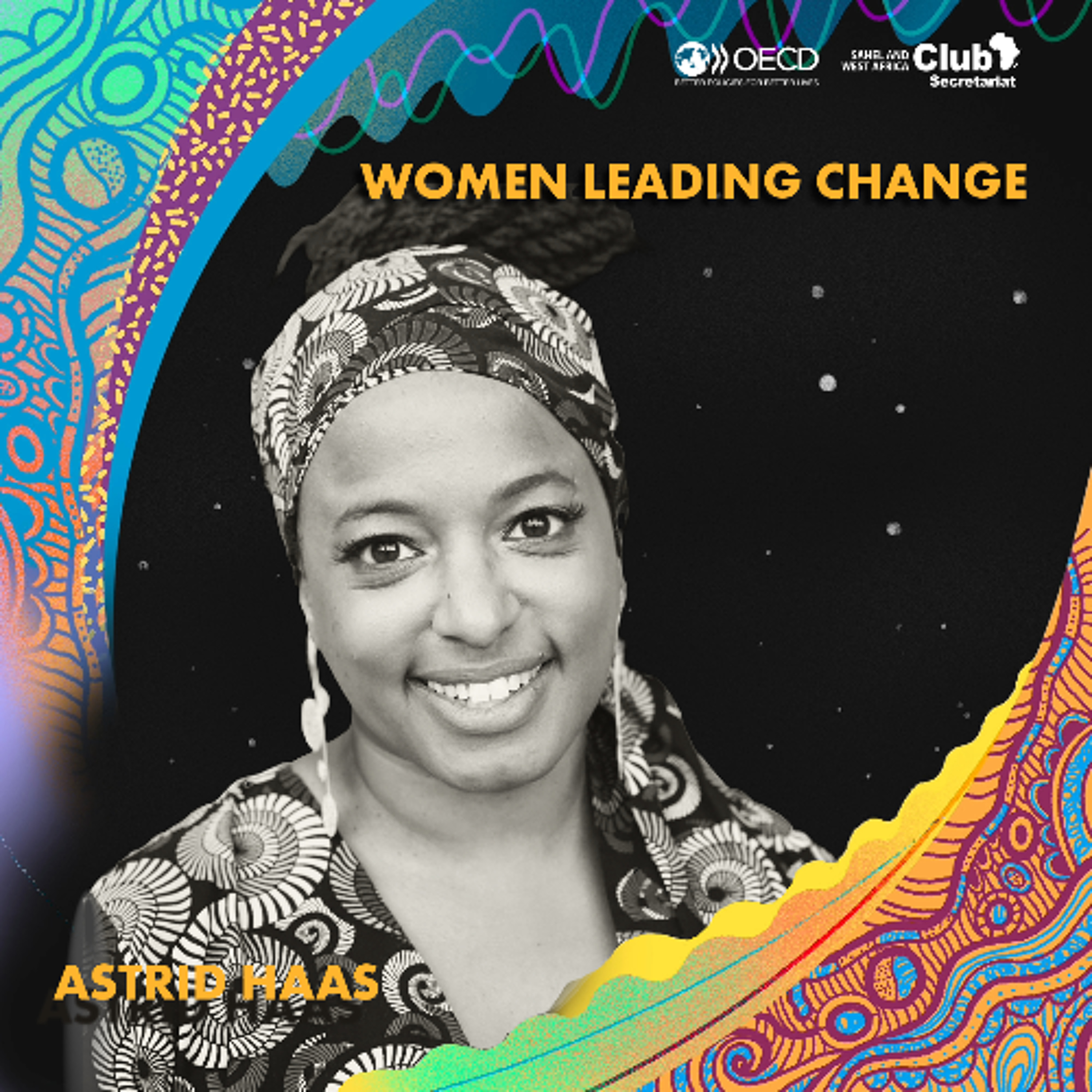
How can urbanisation drive more sustainable and inclusive cities in Africa?
Africa’s cities are expanding at an unprecedented rate, bringing both challenges and opportunities. In this episode, feminist urban economist Astrid Haas explores three key pillars for inclusive and sustainable growth: governance, planning, and financing. In her view, effective governance requires adaptive institutions, transparent decision-making, and collaboration with civil society and the priv

Shaping Gender Equality in Food Systems and Nutrition Policies
What role does gender equality play in shaping food systems and nutrition policies? In this episode, Eileen Nchanji, gender specialist at the Alliance of Bioversity International and the International Center for Tropical Agriculture, explains that integrating gender is just a starting point—real progress requires measurable outcomes to track gender impacts. She highlights how gender-focused fundin

Food trade: embracing informality & gender equity
In this episode, Jeanine Cooper, former Liberian Minister of Agriculture, and founder of FABRAR, a pioneering agri-business, discusses intra-regional food trade in West Africa. She urges policymakers to work with the realities of trade informality for more effective economic planning, warning that relying on flawed data leads to flawed development outcomes. She emphasises the importance of recogni

L'intégration du genre dans les politiques publiques en Afrique de l'Ouest
Dans cet épisode, Dr. Barbara Ky, Directrice du genre à la Commission de l’UEMOA, se penche sur la question cruciale de l'intégration du genre au sein des ministères, des institutions et des politiques publiques dans les pays de l'UEMOA. Elle explore l'importance de la budgétisation sensible au genre et des spécialistes sectoriels dans l’élaboration de politiques publiques équitables en matière de

Nourishing Equality: Transforming Food Systems for Healthy and Affordable Diets
How can food systems be transformed so that healthy and affordable diets are accessible to all?
In this episode, Ndidi Okonkwo Nwuneli, explores key strategies to achieve this goal. She discusses diversifying diets with more locally sourced, nutrient-dense indigenous foods that require fewer resources to grow and are climate-resilient. Another critical approach is boosting productivity gains and

Responding to gender-based violence in Nigeria
Sexual and gender-based violence (SGBV) is a major issue in Nigeria. Our guest, Chioma Agwuegbo, talks about changes needed in the justice system to better support victims and prevent new acts of violence. She calls for a mindset change in the way women and girls are perceived. She also identifies concrete ways in which international partners can better support women’s rights organisations.
Chio

E-mobility: a new opportunity to look at transport in Africa differently?
How do we create a policy environment that embraces innovation and empowers us as young Africans to design transport solutions that suit our context?” In this episode, Valerie Labi, shares her broad, ambitious, multi-sectoral vision of the future of transport in Africa. For Valerie, it’s important for Africa to design its own e-vehicles, produce them locally at scale, and become a thought leader a

À quoi ressemble une mobilité accessible, durable et inclusive dans les villes africaines ?
Rejoignez-nous avec Charlène Kouassi, directrice de Movin'On LAB Africa, pour plonger dans les dimensions genrées de la mobilité et découvrir les opportunités de passer à un transport durable grâce à l'électrification, aux énergies renouvelables et à l'innovation numérique. Charlène appelle à l’amélioration des infrastructures pour la marche et le vélo et souligne la nécessité de capitaliser sur l

Interview with Professor Kwadwo Owusu
How can we leverage events like COP28 to advocate for practical solutions to the daily environmental challenges that some countries are facing? What is Ghana expecting from COP28?
We tried to answer these questions with Professor Kwadwo Owusu, Director of the Centre for Climate Change and Sustainability Studies at the University of Ghana. With him we explored some of the environmental issues th

Activisme climatique : cartographie des ressources naturelles et des savoirs locaux
Le Tchad possède un environnement particulièrement dégradé. Dans cet épisode, Mme Hindou Oumarou Ibrahim, géographe et activiste climatique nous parle de son action : aider les communautés tchadiennes à cartographier leurs ressources naturelles en puisant dans les savoirs locaux. Cette démarche promeut la bonne gouvernance en matière d'accès aux ressources et vise à apaiser les tensions intercommu

Un écosystème entrepreneurial inclusif pour les femmes et les jeunes
D’ici 2050 la population africaine devrait doubler, ainsi que la proportion de personnes en âge de travailler. La jeunesse africaine détient la clé de son développement à venir, mais le manque d’emplois de qualité représente un défi majeur. Quels sont les prérequis nécessaires pour l’émergence d’un écosystème entrepreneurial inclusif pour les femmes et les jeunes en Afrique de l’Ouest ?
Nous en

Renforcer l’analyse des questions de genre : le rôle des organisations de femmes
S’il est déjà extrêmement difficile d’accéder à des données fiables dans les zones de conflit, il l’est encore plus d’obtenir des données ventilées par sexe. Dans cet épisode, Ornella Moderan, spécialiste des questions de genre et chercheuse associée au sein de l’Unité de recherche sur les conflits de l’Institut Clingendael, explique le rôle essentiel des organisations de femmes pour permettre une

Données sur le genre : pallier les lacunes et exploiter le potentiel d’une approche plus qualitative
Les lacunes persistantes en matière de données sur le genre sont lourdes de conséquences. Elles invisibilisent les inégalités entre hommes et femmes, produisent des politiques perpétuant les stéréotypes de genre et limitent les opportunités des femmes. Dans cet épisode, Dr Maïmouna Ndoye, coordinatrice du projet d’Equipop « Jeunes féministes en Afrique de l’Ouest », préconise en matière de collect

Closing the gender gap in Ghana's parliament
Women’s representation in the Ghanaian parliament stands at 14.5%, falling short of the minimum UN recommended proportion of 30%. Ghana’s Affirmative Action Bill, which calls for a progressive increase in women’s political participation to reach parity by 2030, has yet to be passed. Join us in this episode with Edith Efua Chidi, as she delves into the range of structural barriers preventing women

Genre, équité et action climatique : des questions étroitement liées
Le changement climatique accentue les inégalités de genre et fait peser des menaces spécifiques sur les moyens de subsistance, la santé et la sécurité des femmes. Celles-ci dépendent en effet davantage des ressources naturelles, mais y ont un accès plus limité. Elles assument par ailleurs une responsabilité disproportionnée pour l’approvisionnement en eau. Dans cet épisode, nous démêlons les liens

Empowering young women entrepreneurs
Women entrepreneurship is on the rise in Africa, with more women starting and running businesses than ever before. Yet, they face significant challenges, including limited access to finance, markets, and training, as well as social and cultural barriers. In this episode, we unpack these issues with Somachi Chris-Asoluka, CEO of the Tony Elumelu Foundation, a major supporter of women entrepreneursh
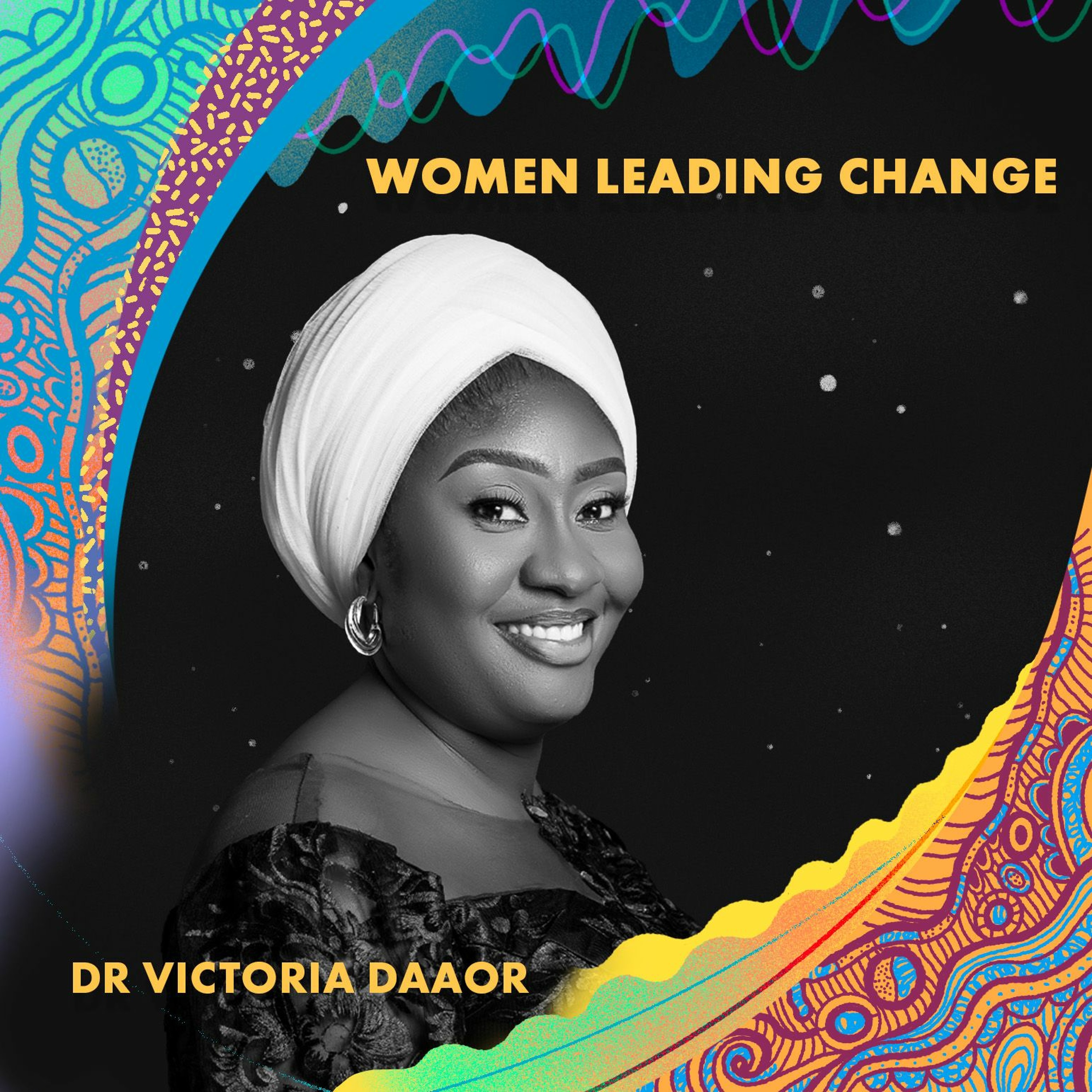
Engaging men and boys in the fight against gender-based violence
In North-Central Nigeria, intracommunal conflict related to the sharing of water, land, and other resources, has led to unprecedented levels of gender-based violence (GBV). In this episode, Dr Victoria Daaor, Executive Director of the Elohim Foundation, explains that addressing the underlying causes of GBV requires engaging women, men, girls, and boys to challenge harmful gender norms and promote

Women shaping peace in Nigeria
In conflict-afflicted areas of the Sahel and West Africa, gender inequalities are exacerbated. Women face increased risk of gender-based violence (GBV) and limited access to essential services. Despite these challenges, women are mobilising and claiming seats in peace negotiations. In this first episode, Dr Fatima Akilu talks to us about women as agents of change in the conflict-affected areas of

Do you see variations in the types of violence in different places?
In this audio clip, Dr. Roubadeh Kishi explores the variations in the types of violence in difference places in West Africa. Dr. Roubadeh Kishi is the author of “Political violence targeting women in West Africa”, a paper published in the West African Papers series by the Sahel and West Africa Club Secretariat (SWAC/OECD) in partnership with the Armed Conflict Location & Event Data Project (ACLED)

What does your analysis of political violence against women show about how women are targeted?
In this audio clip, Dr. Roubadeh Kishi discusses her analysis of political violence against women and how ACLED data shows how women are targeted, as well as which type of violence is the most prevalent . Dr. Roubadeh Kishi is the author of “Political violence targeting women in West Africa”, a paper published in the West African Papers series by the Sahel and West Africa Club Secretariat (SWAC/OE

How does political violence impact women’s lives?
In this audio clip, Dr. Roubadeh Kishi looks at how political violence impacts women’s lives in West Africa. Dr. Roubadeh Kishi is the author of “Political violence targeting women in West Africa”, a paper published in the West African Papers series by the Sahel and West Africa Club Secretariat (SWAC/OECD) in partnership with the Armed Conflict Location & Event Data Project (ACLED).
Dr. Roudabeh

Dr Djimé Adoum, Haut représentant de la Coalition pour le Sahel, Réunion de haute niveau
Dans ce clip audio pris lors de la réunion de haut niveau sur les crises alimentaires et nutritionnelles dans les régions du Sahel et du Lac Tchad, le CSAO demande a Dr Djimé Adoum, Haut représentant de la Coalition pour le Sahel, « Il semblerait que les constats autour de la crise soient partagés. Selon vous, quels facteurs permettraient de changer la situation ? »
Pour en savoir plus sur notre

S.E.M. Jean-Claude Kassi Brou, Président de la Commission de la CEDEAO, Réunion de haute niveau
Dans ce clip audio pris lors de la réunion de haut niveau sur les crises alimentaires et nutritionnelles dans les régions du Sahel et du Lac Tchad, le CSAO demande au président de la CEDEAO, S.E.M. Jean-Claude Kassi Brou, « Il semblerait que les constats autour de la crise soient partagés. Selon vous, quels facteurs permettraient de changer la situation ? »
Pour en savoir plus sur notre travail s

Where does most pastoralist violence occur & how and why has it expanded? - Matthew Pflaum
In this audio clip, Matthew Pflaum looks at where most pastoralist violence occurs in West Africa and how and why has it expanded spatially. Matthew Pflaum is the author of “Pastoralist Violence in North and West Africa”, a recent paper published in the West African Papers series by the Sahel and West Africa Club Secretariat (SWAC/OECD) in partnership with the Sahel Research Group of the Universit

What has caused the rapid acceleration of pastoralist violence? - Matthew Pflaum
In this audio clip, Matthew Pflaum examines what has caused the rapid acceleration of pastoralist violence in West Africa. Matthew Pflaum is the author of “Pastoralist Violence in North and West Africa”, a recent paper published in the West African Papers series by the Sahel and West Africa Club Secretariat (SWAC/OECD) in partnership with the Sahel Research Group of the University of Florida.
Mat

Does the transnational nature of pastoralism pose a challenge to ending violence? - Matthew Pflaum
In this audio clip, Matthew Pflaum explores what challenges the transnational nature of pastoralism poses for finding solutions to pastoralist violence. Matthew Pflaum is the author of “Pastoralist Violence in North and West Africa”, a recent paper published in the West African Papers series by the Sahel and West Africa Club Secretariat (SWAC/OECD) in partnership with the Sahel Research Group of t

What are some solutions to attenuating pastoralist violence in West Africa? - Matthew Pflaum
In this audio clip, Matthew Pflaum explores possible solutions to attenuating pastoralist violence. What can be done at the varying levels of government – state governments, regional governments and regional institutions? Matthew Pflaum is the author of “Pastoralist Violence in North and West Africa”, a recent paper published in the West African Papers series by the Sahel and West Africa Club Secr

The Regional Stabilisation Strategy faces challenges in the Lake Chad region - Dr Olajumoke Ayandele
In this audio clip, Dr Olajumoke (Jumo) Ayandele discusses some of the challenges faced when implementing the Regional Stabilisation Strategy (RSS) in the Lake Chad Basin region. Dr Ayandele is the author of “Non-Military Actors as a Regional Strategy in the Lake Chad Region”, a recent paper published in the West African Papers series by the Sahel and West Africa Club Secretariat (SWAC/OECD) in pa

What role for non-military actors in Boko-Haram affected areas of Lake Chad? - Dr Olajumoke Ayandele
In this audio clip, Dr Olajumoke (Jumo) Ayandele discusses the collaborative mechanisms that are being implemented with non-military actors in the Lake Chad Basin region and what role these actors play in creating recovery and resilience in Boko-Haram affected areas. Dr Ayandele is the author of “Non-Military Actors as a Regional Strategy in the Lake Chad Region”, a recent paper published in the W

The evolution of violence across the Sahel and West Africa - with Olivier Walther and Steven Radil
In this podcast, the OECD Sahel and West Africa Club Secretariat is pleased to welcome Olivier J. Walther and Steven M. Radil, two authors of a recent book published by the Sahel and West Africa Club called "The Geography of Conflict in North and West Africa".
African governments are increasingly confronted with new forms of political violence by organised non-state actors. The situation is parti
Recommandé

Français par Passion

MANIPURA - Spiritualité & Énergétique

Le Chant de la Terre
Français dans le Monde (FDLM)

Passeurs et Reveurs des mots

Les Aventures d'Ulysse

Le Bureau de l'étrange - ( HISTOIRES D'HORREUR - CREEPYPASTAS - HISTOIRES AUDIOS)

PIA – Podcast Intelligence Artificielle

Le Français Parlé avec Krys - Un Podcast pour comprendre le français "de la vraie vie"

Ecoutegay : histoires érotiques gays 🌈🔞

Histoires de lieux hantés

Pivot ! Le podcast français 100 % Friends !
