The Policy Nerd, by UNESCO
The Policy Nerd is a podcast from the UNESCO Inclusive Policy Lab that brings together leading thinkers to discuss concrete data and debate policy solutions aimed at building more equitable and smarter societies. Each episode explores evidence-based approaches to pressing policy challenges, translating research and ideas into practical proposals. The show is produced under the Inclusive Policy Lab's mission of connecting experts and policymakers worldwide. The views expressed are those of the individual authors and do not necessarily represent UNESCO or its partners.
Épisodes
We've cut the workweek before – what history says about 4-day week
Juliet Schor, professor at Boston College, bestselling author and global advocate for worktime redesign, returns to the podcast following the 2023 episode. She now brings new insights from expanded large-scale trials in reducing the workweek from five to four days, with no pay cuts. Since we last spoke, these trials have grown significantly in both scale and scope, covering more than 245 organisat

Institutions fuel prosperity, make them inclusive and capable
Daron Acemoglu, the newly minted Nobel prize laureate in Economics and distinguished Institute Professor at the Massachusetts Institute of Technology (MIT), debunks for us some long-standing assumptions about technology, productivity, and shared prosperity. Benefits do not automatically tickle down from industry to workers. Distributive gains take inclusive institutions and a calibrated approach t

Too risk averse, too path dependent – redesign governance systems to face shocks
Mark Esposito, Professor at Hult International Business School and Adjunct Professor of Public Policy at Georgetown University, joins us today to discuss crisis and resilience. He dissects the concrete markers of a resilient system and discusses what helps it withstand (and possibly thrive in) turmoil. The number of shocks will only increase, hence it is high time to in-build agility and implicit
Infantilized and unequal – the public sector is struggling when it’s needed the most
Charles Landry, author and president of the Creative Bureaucracy Festival, talks to us about how the public sector has been weakened from within through consistent reduction in its capacities and expertise. Cuts in analytical, foresight and strategic entities have not gone unfelt in crises. Under pressure to deliver, the public sector has been increasingly reaching to the market and outsourcing wo
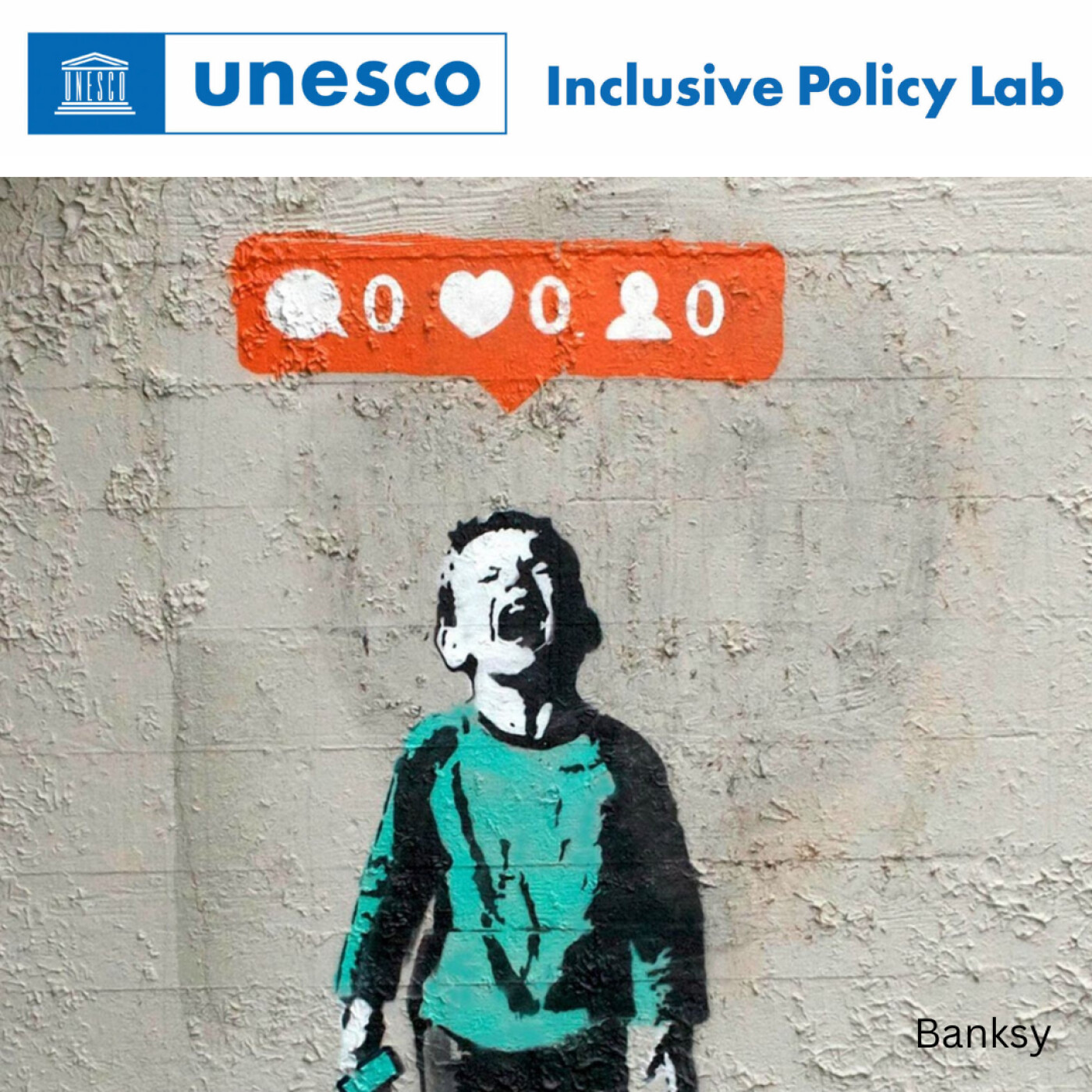
Social media and trust in science – “it’s complicated”
Much guilt for the erosion of public trust in science is laid at the feet of social media. Does data support such fears? Homero Gil de Zuñiga Navajas and Brigitte Huber conducted a 20-country study that looked into this relationship and they say… “it’s complicated”. Social media news use is positively related to trust in science, yet worries about echo chambers and polarization are real. They also
There is no refuge in the lab, science needs to reach out
Sudip Parikh, CEO of the American Association for the Advancement of Science and Executive Publisher of the Science journals, talks to us about major trends in science and how they affect us all. He begins by saying that populism and polarisation are taking hold of science. Belonging to a group – be it political, faith-based or any other – becomes more important than the truth and scientific fact.
Stand on the shoulders of giants, take the next leap on climate
Mark Howden, a Vice Chair of the Intergovernmental Panel on Climate Change (IPCC) and co-recipient of the 2007 Nobel Peace Prize, talks about trust in climate science. How vital is this trust for our collective policies and climate trajectory? Why have we ended up polarizing and politicising climate science to such levels? Can we de-escalate? Mark has answers. Listen closely to his discussion with
Recast your economic rulebook, deliver for people
Dani Rodrik, Professor at Harvard Kennedy School and the visionary who predicted the risks of unfettered globalisation, tells us how we need to collectively change course. The old narratives and policies have not aligned with the expectation that all boats would be lifted. New solutions are needed to shore up the middle class and deliver on the promise of shared prosperity. He says that the servic
Is the 4-day workweek the solution we've been looking for?
Juliet Schor, Sociology Professor at Boston College and a bestselling author, says the traditional approaches to work need redesigning. The case she makes is for a reduction of the workweek from five to four days with no pay cut. Juliet has been trialling it around the world – including Australia, Brazil, Canada, South Africa, the UK and the US – and brings concrete data on its benefits for both t

We live in times of abundance, yet our incapacity to govern it is tearing societies apart
Manuel Muñiz, the Provost of IE University in Madrid and the former Spanish Vice-Minister of Foreign Affairs, talks to us about the massive shifts our societies, economies and systems of governance are undergoing. The changes may be not as visual – no one is tearing down a wall – but they are as significant as what has happened at the end of the Cold War with the undoing of the international order
Data value: to share, or not to share
Diane Coyle, Professor of Public Policy at the University of Cambridge and Director of the Productivity Institute, talks to us about data value. She explains how good (or bad) we are at capturing such value and why we need to start distributing it amongst all actors involved in its co-creation. Diane tackles the key issue of whether/what share of that monetary and non-monetary value should flow ba
Social safety nets catch us in crisis, invest in those
Nadia Calviño, Vice-President and Minister for Economy and Digitalization of Spain, talks to us about inequalities, and how our exit from the current crises is through closing the most gaping divides. She says there are solutions, with Spain’s minimum subsistence income being an example of such. She also warns that it is not only the physical world we must be paying close attention to. If unchecke
We embraced dysfunctional growth, change course
Mariana Mazzucato, professor at University College London and a bestselling author, explains how the current systems are geared towards the pursuit of dysfunctional – i.e., financialised, consumption-led, climate-damaging – growth. They are also designed to fail, operating in a fixing and reactive rather than proactive mode. The present crises are clear lessons for all. The direction has to chang
Recalibrate - our policies were too heavy on efficiency, too light on equity
Douglas Elmendorf, Dean of Harvard Kennedy School, tells us what it would take to reset equitably after COVID-19, how herd thinking (amongst experts and beyond) hurts us and why trust in science is to be restored if the intent is to move ahead smartly. He says that we’ve been focusing too much on efficiency and not enough on equity. That has to change. But how? Listen to his discussion with Gabrie

Polarisation kidnapped science, the price is paid by all
Peter Gluckman, the President of the International Science Council and the former Chief Science Advisor to the Prime Minister of New Zealand, came on to discuss how polarisation has infiltrated science and is tearing up the public trust in it. He says that the acceptance (or rejection) of scientific conclusions has become an ideological badge of identity. Social media only adds to it, overloading
From ivory towers to glass houses, science is transforming
Gloria Origgi, Director of Research at the CNRS in Paris, tells us that science is power and public trust in it is key. There is no hiding – science is now part of participatory democracy and requires changing from within towards new forms of legitimation (beyond the ivory tower of a community of peers) and inclusion of the public. Critically, she says people need hands-on help to navigate the wor

From reactive to proactive: Shaping AI for a just future
Vilas Dhar, president of the Patrick McGovern Foundation and a leading voice on global AI policy, discusses how rapid and profound technological advancements, particularly in artificial intelligence, are reshaping society at an unprecedented pace. He highlights the need to move from reactive to anticipatory policy approaches, focusing on equity, dignity, and inclusivity. Dhar stresses the risks po

Universal Basic Services vs. Universal Basic Income - let's talk
This podcast is on Universal Basic Services (UBS). The experts are Anna Coote of the New Economics Foundation and Maeve Cohen of the Social Guarantee Network. The host is UNESCO’s Iulia Sevciuc.Thread 1 untangles the agenda of UBS, going into the:- Premises – what is the core of UBS and how it should be approached as a framework rather than a stand-alone policy?- Targets – why are equity, sustaina
We politicised science and scientised politics – is that a problem?
Gil Eyal, Professor of Sociology at Columbia University, talks to us about trust in science, trust in expertise, and the slow demise of such. He explains that not all science is equal and neither is public trust in it. Regulatory science is what underpins policy and collective decision-making, yet this is exactly what the public mistrusts the most. Why? It has a lot to do with the distributional e
Our relations around data are broken - why and how to fix them
Our thinking on the true value of data is not where it should be this far into the game. Maria Savona looks with us into the economic and social aspects of the equation, saying that all should be captured when it comes to data. Value concentration is a concern and redistribution should be on our collective mind. There are policy attempts to do so – listen closely for hands-on details – but much wo
India's quest for basic income
This is a 3-part podcast on India’s quest for basic income. It discusses the basic income pilots that have been run so far and, importantly, asks what they tell about the potential of such schemes in India and perhaps in other developing countries.The expert is Sarath Davala, Chair of the Basic Income Earth Network (BIEN), and co-founder for India Network for Basic Income. He served as the researc
Data is an instrument – are we using it right?
This is a 3-part podcast concerned with data and knowledge-based decision-making.The guest is World Bank’s Arianna Legovini. Her expertise – critical to this discussion – is in improving the impact of research on development practice and policy.The hosts are UNESCO’s John Crowley and Iulia Sevciuc.PART 1: Data and governanceData is an instrument in and of governance. As any tool, data is as good
Partner on data, make it work for good
This is a 3-part podcast on new data and, particularly, if and how the private and the public sectors should be working together to advance its use for public good.The expert is World Bank’s Holly Krambeck. She founded the Development Data Partnership – a coalition between international organizations and the private sector to further responsible use of third-party data in international development
Treat data like you treat infants – signals and empathy are key
This is a 2-part podcast on data culture – how the private sector built such from within and if/how the public sector should follow.The guest today is James Ingram, CEO of Splashlight and Telmar, and co-founder of LiiV. His business is rooted in data and his expertise lies in the ways data fuels growth. He is also invested, intellectually and philanthropically, in advancing the field of digital an
Data equity – there is no hiding
This is a 3-part podcast on Data for Good. It debates new data landscapes, power dynamics in data, inequities, and concrete solutions to redress some of them.The expert today is Gry Hasselbalch. Her expertise is in data equity, and power in data. She served as a member of the European Commission’s High-Level Expert Group on AI, and a member of the Danish government’s first Data Ethics Expert Group

Science fiction for turbulent times - future histories to inspire alterative policy thinking
Kim Stanley Robinson, an award-winning science fiction writer best known for the Mars Trilogy and Ministry of the Future, explores how science fiction shapes science representations in society and argues that understanding “totality” is essential in turbulent times. He explains how speculative futures are one of the few spaces to create cognitive maps to make sense of the complexity of global syst

Invest in knowledge, use it to rebuild
This podcast is part of the high-level podcast series, which introduces listeners to the world’s leading figures as they discuss how we can rebuild in a fairer and a smarter way after COVID-19.Our guest in this episode is Professor Bambang Brodjonegoro, the Minister of Research and Technology of Indonesia. He has formerly served as both the country’s Minister of National Development Planning and t

California trials basic income, other 14 pilots are in sight
This is a 3-part podcast on the Californian guaranteed income experiment. It goes deep into the trial, probing it from all angles and extracting lessons for the rest.The experts are Stacia West and Amy Castro Baker. Their expertise is in basic income, unconditional cash transfers, women’s poverty, and wealth inequality. They are the independent co-evaluators of the guaranteed income trial in Stock

Coronavirus Supplement, the Australian way of income support in crisis
This is a 2-part podcast on the Australia's Coronavirus Supplement– an unconditional transfer trial meant to help contain the socio-economic damage brought about by COVID-19.Our expert is Elise Klein, Senior Lecturer of Public Policy at the Crawford School of Public Policy, Australian National University. Amongst her areas of expertise are social security, unconditionality, and women’s economic se

Is ‘victim-blaming’ a thing in social policy
The COVID-19 turmoil came with more universal and arguably more progressive social policy interventions across developing and advanced economies. For example, never before have solutions such as Universal Basic Income been entertained so seriously in policy debates, and indeed experimented with at such a scale.This podcast is on universalism and social policy in the context of the current crisis.

Put carbon dividend at the core of post-COVID reboot
This is a 3-part podcast to connect the dots between carbon price-and-dividend and universal basic income. We spot the emerging ideas and ask how we should be equity-weighting green policies.PART 1: tackles carbon price-and-dividend· Carbon tax and its (much feared) regressive aspects.· Ways to equity-weight carbon tax and the role of carbon dividends.PART 2: links carbon dividend to universal ba

Basic Income – deciphering the promises and the data
This is a 3-part podcast on universal basic income and its potential to cushion the effects of the COVID-19 crisis. The talk is concrete:· Does basic income actually hold the promise of greater equity in this reset and what is the broader policy mix we need to be thinking about;· Why should carbon tax be entertained as a financing option and what are the other sources that could fund to-scale/long

Close social protection gaps to reset equitably after COVID-19
This episode is concerned with social protection and its place in the post-COVID reset.We dissect this into issues of:· Social protection gaps – how these need fixing to counter the immediate effects of the crisis, as well as to set countries on a more inclusive pattern in the long run;· Women during the crisis – how they fell through the cracks and what is the place of gender in recovery policies

Universal Basic Income and beyond — what are our options for recovery
In this podcast we connect the dots between inequality, COVID-19, and inclusive recovery. We discuss this with Balázs Horvath, Chief Economist for UNDP in Asia and the Pacific. This is a forward-looking conversation concerned with policy shifts that need to happen for such a recovery to be possible. Key points covered are:What policy pathways are likely to bring about a more equitable recovery?;If

Inequality and climate change: how to untangle the injustice
In this podcast we discuss inequality and climate change with Professor Tahseen Jafry, Director of the Centre for Climate Justice at Glasgow Caledonian University. Tune it to untangle the triple injustice of climate change.Hosted on Ausha. See ausha.co/privacy-policy for more information.

Inequalities and transformative knowledge
Hosted on Ausha. See ausha.co/privacy-policy for more information.

The Inclusive Development Agenda
This podcast discusses the context of inclusive development and introduces the Inclusive Policy Markers. We explore how the Inclusive Policy Markers and the work of the Inclusive Policy Lab can help further the inclusive development agenda.Hosted on Ausha. See ausha.co/privacy-policy for more information.

Design thinking for social inclusion
In this audio lecture, sponsored by the Stanford Social Innovation Review, Jocelyn Wyatt, social innovation lead at the award-winning consultancy IDEO, describes her organization’s efforts in Asia, Africa, and Latin America to use design thinking, a problem-solving system that is grounded in a client’s or costumer’s needs.Hosted on Ausha. See ausha.co/privacy-policy for more information.