Top Class: The OECD Education Policy Podcast | Teachers, PISA, Students
Top Class, the OECD Education Podcast, interviews leading educators, researchers and policy experts about the big issues facing education systems around the world. It covers topics such as teaching, learning, PISA, and teachers. The podcast provides insights into education policy and practice.
Épisodes
PISA Insights: Falling scores, AI concerns and digital distractions
Average student performance in reading and mathematics has sharply dropped in many countries, according to the latest Programme for International Student Assessment (PISA), while science performance is relatively stable. More than 760,000 15-year-old students took the PISA test last year in 91 countries and economies. Why have there been such large drops performance? And how are digital technologi
Lessons from second-career teachers
Across many education systems, schools are facing recruitment challenges, evolving career expectations, and increasingly diverse student needs. In response, more systems are opening doors to people with outside experience. In this episode of Top Class, OECD Editor Duncan Crawford explores the opportunities and challenges for second-career teachers. He is joined by Nicole Daley, a Biology Teacher a
Are exams still the fairest way of assessing students?
What makes a fair exam? It’s a question that has grown in significance as upper secondary certificates play an ever more pivotal role in students’ lives. They are a passport to higher education, training and employment at a time when institutions and employers are often choosing from larger pools of candidates than ever before.
In this episode of Top Class, the OECD’s Chris Moore is joined by Rut
The importance of teacher knowledge
What makes a great teacher? Beyond subject expertise, effective teaching depends on a strong understanding of how students learn, what motivates them and how to create classrooms where every learner can thrive. A new OECD report reveals significant differences between countries in teachers’ general pedagogical knowledge - the knowledge that helps teachers explain concepts clearly, anticipate misc
How Estonia delivers world class education, a conversation with Estonia’s Education Minister
What does it take to lead one of the world’s highest-performing education systems? In this episode of Top Class, OECD Editor Duncan Crawford speaks with Estonia’s Minister of Education and Research, Kristina Kallas. Drawing on Estonia’s experience with digital learning, teacher professionalism and long-term student well-being, Kallas reflects on the pressures facing education leaders today, includ
What really keeps early childhood staff in their jobs?
Working with young children can be a tough job, so what can be done to ensure staff want to stay in their jobs? This episode of Top Class delves into the world of creches, kindergartens and nurseries. While most early childhood education and care staff report high job satisfaction, around half don’t feel valued by society, according to the OECD’s TALIS Starting Strong survey. OECD Editor Duncan Cr
How an alternative pathway into teaching comes to life
Can alternative pathways into teaching help tackle teacher shortages and strengthen the profession? With traditional teacher preparation programmes struggling to keep pace with demand in some countries, especially in underserved areas, some are turning to non-traditional routes to attract new talent.
Drawing on insights from the OECD paper Alternative Pathways into Teaching: Broadening Access an
Is generative AI a gamechanger for education?
Generative Artificial Intelligence is rapidly emerging as one of the most debated forces in education today. Tools such as ChatGPT and Claude are widely predicted to reshape how students learn and how teachers teach. Advocates argue that GenAI could democratise access to high quality education, offering personalised learning at scale while reducing administrative burdens for educators. Critics war
The state of teaching around the world, TALIS results are out
Nine in ten teachers are satisfied with their jobs, yet one in five report a lot of stress. Just two of the findings from the new OECD TALIS report, the largest survey of teachers and school leaders in the world.
TALIS captured the perspectives of 280,000 teachers across over 50 education systems. In this episode of Top Class, OECD project manager Ruochen Li, who led the TALIS team, and Antonia Wu
Why student career preparation is going wrong
A new OECD report reveals that nearly 40% of 15-year-olds are uncertain about their future careers. Alarmingly, only one in three students has attended a job fair or completed an internship, and over 20% hold unrealistic job aspirations. These findings come from The State of Global Teenage Career Preparation, a comprehensive look at how well young people are being equipped for the world of work. I
The state of global education, with OECD’s Andreas Schleicher
More people are getting degrees than ever before, but family background has a big influence on whether people pursue university or another form of tertiary education. That’s one of the key findings of this year’s OECD report Education at a Glance. The report is the authoritative source of information on the state of education worldwide, with data on the structure, financing and performance of educ
Reinventing education in Ukraine with former education minister Liliia Hrynevych
Despite Russia’s war of aggression, Ukraine is rewriting the future of its education system. The New Ukrainian School reform programme is a bold initiative to move away from Soviet-era style schooling and to instead embrace a more modern, student-centred approach. It was launched in 2016, two years after Ukraine's pro-Russian president Viktor Yanukovych was ousted after months of mass demonstratio
The battle for education in Ukraine
How to improve Ukraine’s education system during a time of war was the main topic of discussion at an education festival in the western Ukrainian city of Lviv last month. More than 2,000 Ukrainian teachers gathered for the Teachers of the Future 2025 festival to discuss efforts to reshape schools across the country. Despite Russia’s ongoing war of aggression, Ukrainian policymakers are pushing for
Can apprenticeships solve the job skills gap?
Employers are struggling to find skilled workers. How can we fix the job skills gap? Apprenticeships are touted as one possible solution. They combine on-the-job training with classroom learning, allowing employers to recruit and train people to meet their skills needs. According to the OECD, there are huge opportunities for apprenticeships to expand into a wider range of sectors. But many countri
How to ensure quality early childhood education and care for all
The early years of a child's life are crucial for their development. Falling behind early can mean never catching up. How can countries ensure lasting benefits from early childhood education and care? In this episode of Top Class, Stephanie Jones, the Gerald S. Lesser Professor in Early Child Development at Harvard University, and Professor Henrik Zachrisson from Centre for Research and Equality i
How to help disengaged teenagers learn
How can you help disengaged teenagers rediscover their passion for learning? In this episode of Top Class, Rebecca Winthrop, a Senior Fellow and Director of the Center for Universal Education at the Brookings Institution, discusses ideas from the new book she has co-authored called ‘The Disengaged Teen: Helping Kids Learn Better, Feel Better, and Live Better’ with OECD’s Director for Education and
LA wildfires: What educators can do when disaster strikes
Wildfires raging in Los Angeles have destroyed thousands of homes and forced the closure of hundreds of schools. As communities try to rebuild following the destruction, including the burning down of schools, what can teachers do to support students? In this episode of Top Class, Developmental-Behavioural Paediatrician David Schonfeld, Director of the National Center for School Crisis and Bereavem
What skills are needed for the AI and green jobs era?
As technologies transform businesses, what critical skills are needed to succeed in the workforce of the future? With artificial intelligence, the green transition, globalisation and much more all impacting the world of work, there is an urgent need for policymakers, educators and businesses to respond. In this episode of Top Class, we explore what needs to happen to ensure people can develop the
Why are adult literacy skills dropping? Insights from the OECD Survey of Adult Skills
Over the past decade, literacy and numeracy skills among adults have largely declined or stagnated in most OECD countries. This is the main finding from the second OECD Survey of Adult Skills, a once-in-a-decade assessment that measured the skills of adults across 31 countries and economies. Despite efforts to strengthen education and adult training systems, only Finland and Denmark have seen sign
Tired, stressed & burnt out: strategies to support teacher well-being & healthy working environments
Every year, countless teachers face stress-related illnesses and burnout. While some manage to keep going, often at a reduced capacity, others leave the profession entirely. In this episode of Top Class, we explore how policymakers and schools can better support teacher well-being and create healthy working environments to ensure educators remain happy and healthy. The CEO of mental health and wel
How to close the STEM gender gap
Why is there a persistent gender gap in Science, Technology, Engineering and Mathematics (STEM) subjects? Despite their growing importance for many future jobs, women make up only about a third of STEM graduates, with numbers dropping to as low as 20% in some OECD countries. This disparity is alarming to many policymakers, especially considering the lucrative and impactful careers STEM fields offe
How the WorldSkills ‘Olympics’ is breaking the vocational taboo
Many countries are experiencing a growing skills gap – what can be done to address the issue? WorldSkills, the largest international skills competition, aims to help. Held every two years, it sees more than 1,400 talented young people compete in 62 different technical disciplines, from Cloud Computing and 3D Game Design to Plumbing and Floristry. The aim is to show off the importance of skills-bas
How to improve science teaching with Nobel Prize winner Carl Wieman
On average, science scores have been falling globally for over a decade. What can be done to improve the quality of science teaching? In this episode of Top Class, Nobel Prize winning physicist Carl Wieman, Professor Emeritus of Physics and Education at Stanford University, and Yidan Prize winner, tells OECD Editor Duncan Crawford that current science teaching techniques are often ineffective. He
The economics of education with Eric Hanushek
Education budgets are huge. Public spending on schools, universities and other public and private educational institutions is around 5% of GDP across OECD countries on average. But is the money well spent? In this episode of Top Class, Economist Professor Eric Hanusek, the Paul and Jean Hanna Senior Fellow at the Hoover Institution, Stanford University, and Yidan Prize winner, tells OECD Editor Du
Why a skills-first approach can help fill job gaps
With some three-quarters of employers reporting difficulty in filling jobs, do traditional hiring methods need to change? As companies shift their focus from past job titles to specific skills, individuals are also rethinking how they present themselves to potential employers. In this episode of Top Class, Papia Debroy from non-profit Opportunity@Work and Dan McCabe, a 3D artist and WorldSkills Ch
Rethinking teacher education to foster student creativity
How do you create a classroom where students are actively creating, innovating and problem-solving? A part of the answer involves empowering teachers with the tools and training they need to help students be more creative. But what does that involve? In this episode of Top Class, OECD Editor Duncan Crawford speaks to US Primary School Teacher Billie Freeland and Jennifer Mansfield, Senior Lecturer
Should smartphones be banned in schools?
Do smartphones help support learning in classrooms or are they a distraction that harms education? A growing number of governments have implemented restrictions on the use of smartphones in schools. Even without nationwide bans, many schools collect phones at the start of the day or insist on children keeping them in lockers during lesson time. Are the bans justified? In this episode of Top Class,
How to make teachers take bullying seriously
Bullying is an urgent issue in many schools and crucial steps need to be taken to address it. In this episode of Top Class, Professor James O’Higgins Norman, the UNESCO Chair on Bullying and Cyberbullying, highlights a common but flawed response from teachers: “I haven’t seen it therefore it doesn’t exist.” What can schools and policymakers do to ensure bullying is tackled effectively, including e
Is AI a superpower for the classroom?
As artificial intelligence integrates into the world of education, how can we ensure it supports effective learning in the classroom? AI learning bots and other AI tools are increasingly being used by students and teachers, but not every agrees this is a good thing. While supporters champion AI as a transformative force that improves personalised learning and efficiency, sceptics are concerned abo
How to navigate ADHD in the classroom
Attention-Deficit Hyperactivity Disorder, commonly known as ADHD, is a growing concern for many policymakers around the world. It affects approximately 5% to 10% of children globally and can influence how they learn and behave, including through hyperactive and impulsive behaviour. In this episode of Top Class, Sam Pittis, a British radio presenter who was diagnosed with ADHD and hosts the podcast
The Taliban, school and me: how an Afghan girl risked everything for an education
Sola Mahfouz was pulled out of school in Afghanistan at the age of 11 after a group of men threatened her safety if she continued studying. After years with no education, she began to secretly teach herself through online classes. Against the odds, Sola later passed a college entry test, travelled to the US to study and is now a quantum computing researcher at Tufts University. Writing under a pse
Why are maths and reading scores dropping globally? New PISA results are out
While some countries have maintained or improved performance in maths and reading, many countries across the globe have seen large drops in educational performance, according to the latest Programme for International Student Assessment (PISA) results. Almost 700,000 15-year old students from 81 countries and economies took the PISA test in maths, reading and science in 2022. Why have there been su
How AI tutors and teaching assistants will transform education
Sal Khan is the founder and CEO of Khan Academy, a non-profit which aims to provide free, world-class education for everyone. His organisation has developed an AI tutor and teaching assistant that he believes will transform global education for the better. Is he right? In this edition of Top Class, OECD Editor Duncan Crawford explores the far-reaching implications that thinking and learning machin
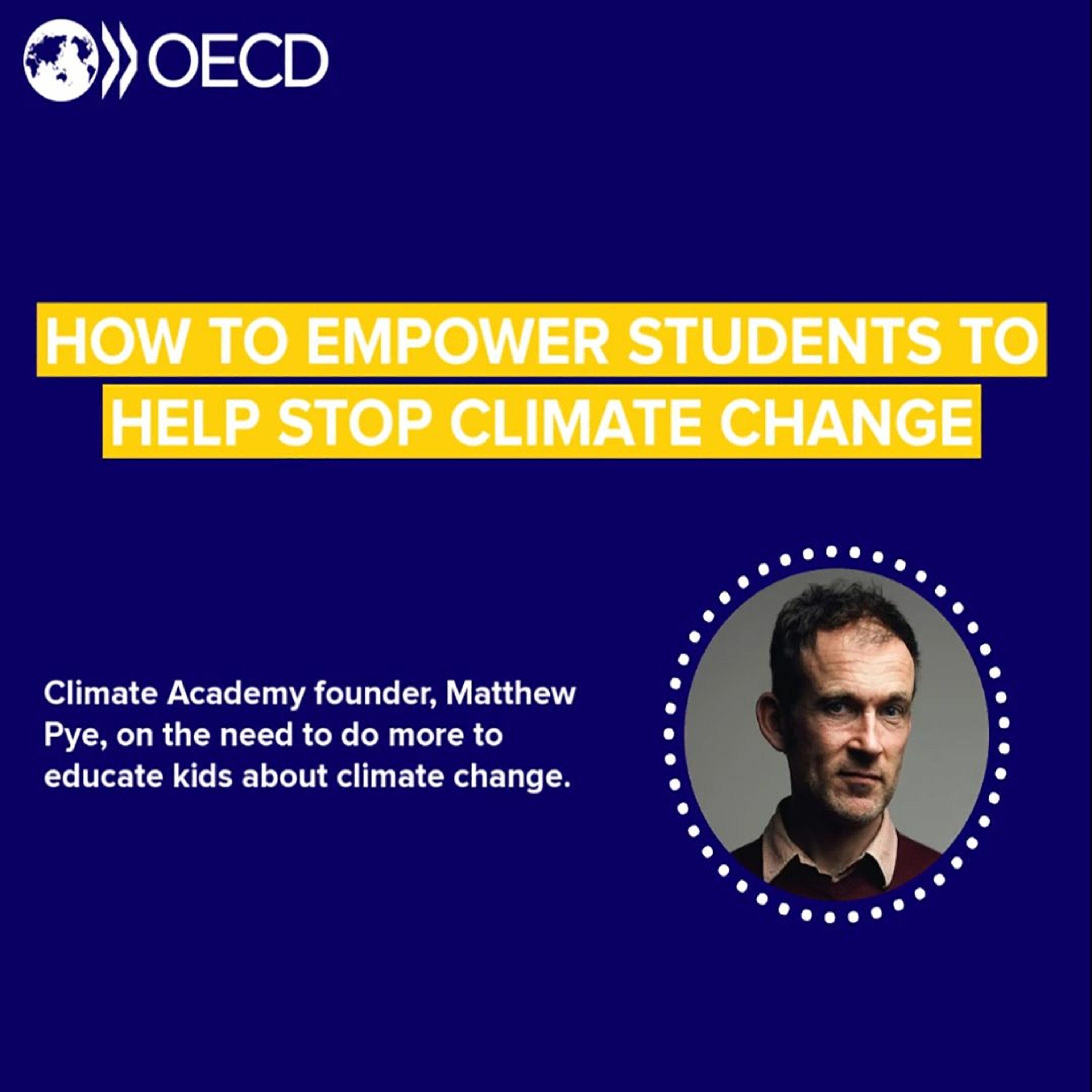
How to empower students to help stop climate change
On a daily basis, academic studies, reports and news tell us that the Earth’s ecosystem is in danger. But are schools doing enough to help raise awareness about climate change? OECD PISA test results show that schools play a central role in educating kids about environmental issues.
In 2018, about 90 percent of school principals across the OECD reported that climate change and global warming wer
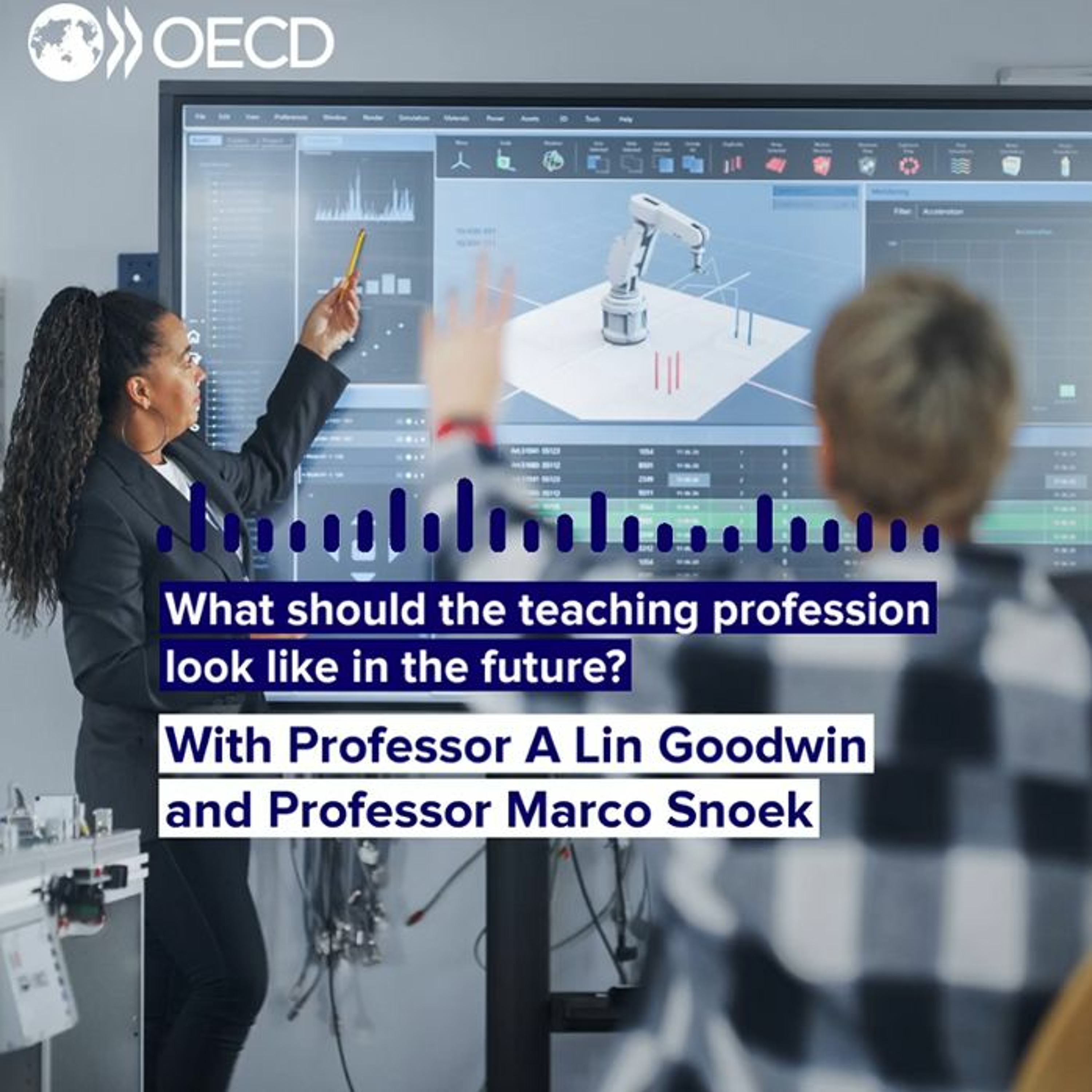
What should the teaching profession look like in the future?
Rapid developments in technology and society mean education is constantly on the move. These developments are having a profound effect on both students and teachers. So what should the teaching profession look like in the future?
In this Top Class podcast, Professor A Lin Goodwin from the Lynch School of Education and Human Development at Boston College and Marco Snoek, Professor of Teacher Devel
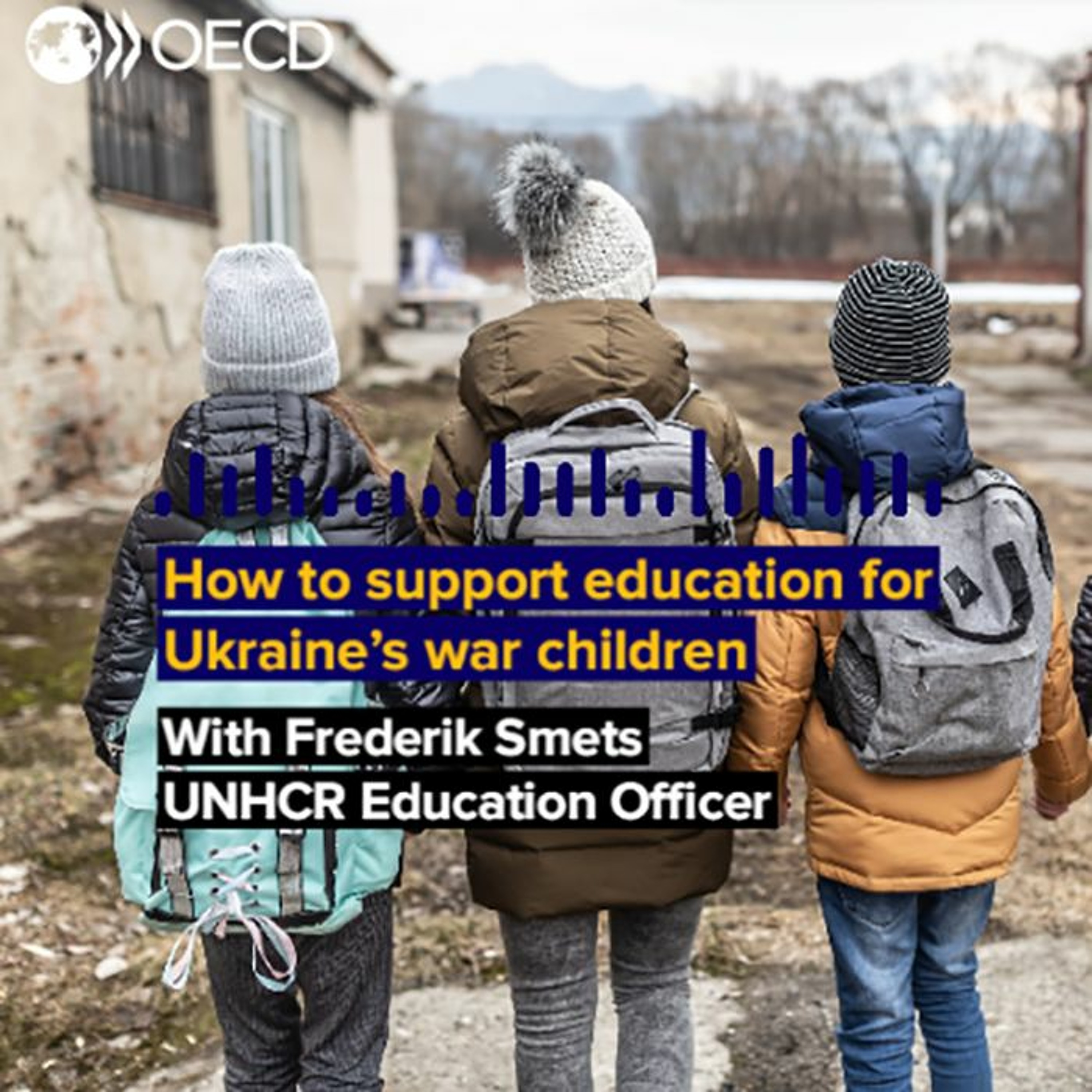
How to support education for Ukraine’s war children
Russia’s war of aggression against Ukraine has led to the destruction of much of the country’s education system. Thousands of schools and universities have been damaged or destroyed, with teachers, students and parents killed in Russian attacks. With the education of millions of children interrupted, how should policymakers, schools and teachers respond? This episode of Top Class explores how to s
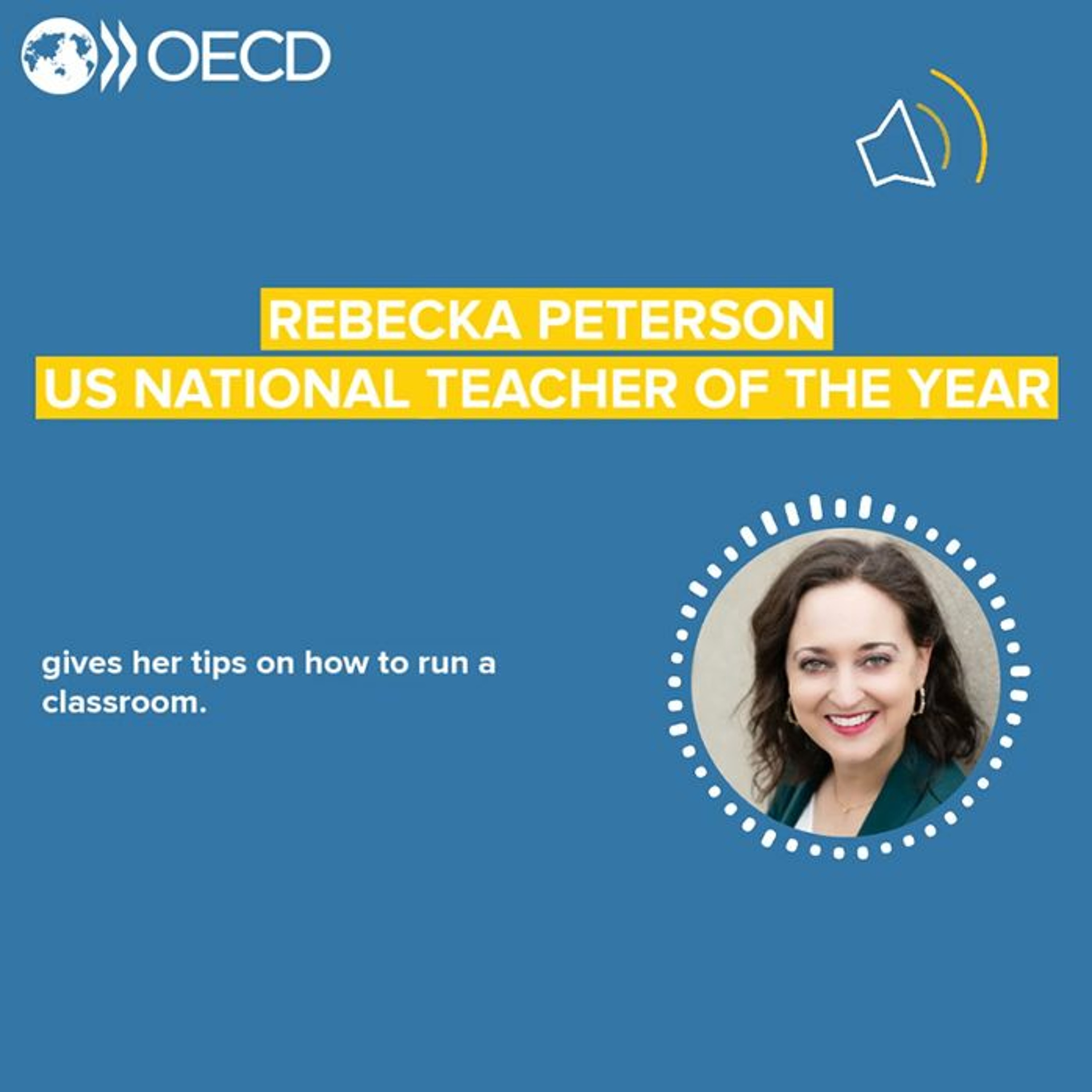
Triumphs and struggles: Insights from the US Teacher of the Year
US National Teacher of the Year Rebecka Peterson on teaching struggles, “flip” lessons, & what it was like to meet US President Joe Biden & US First Lady, Dr. Jill Biden.
Listen to Top Class with Duncan Crawford
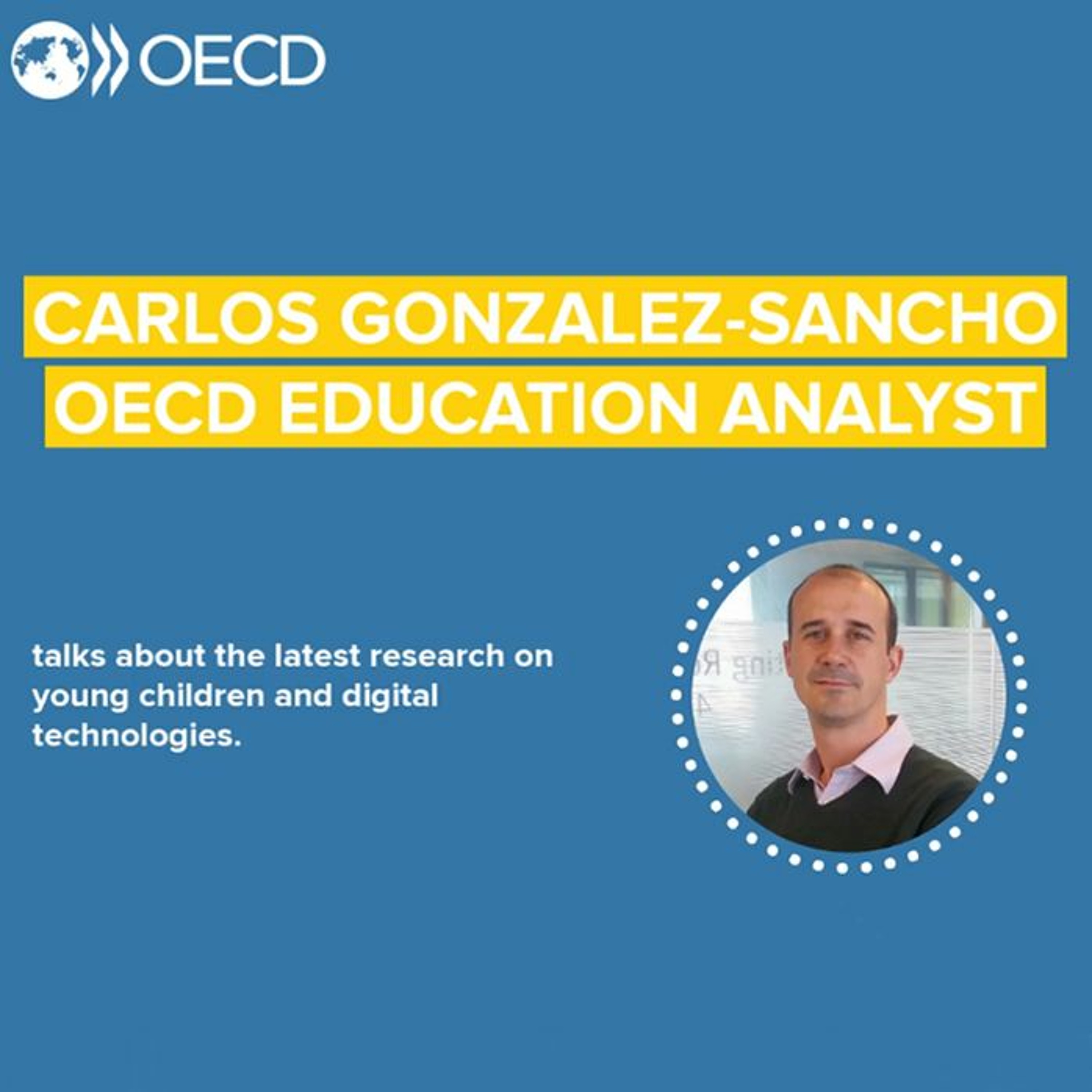
How exposed should young children be to digital technologies?
In a world of tablets, smartphones and AI – how exposed should young children be to digital technologies? This episode of Top Class explores the latest research on the use of digital tech in creches, nurseries and kindergartens. OECD policy analyst Carlos González-Sancho tells OECD editor Duncan Crawford about the findings of the OECD report “Empowering Young Children in the Digital Age” and answe
Everything you need to know about micro-credentials
🎧 Top Class
Micro-credentials are bite-sized qualifications designed to help people demonstrate they have certain skills or experience.
Dr Monique Ositelu from data consultancy firm Itàn & Shizuka Kato, Education Policy Analyst at the OECD explain why they’re becoming more popular.
Why skills like empathy are so important in education
‘A focus on social & emotional skills is fundamentally about high quality teaching’
Professor Stephanie Jones from Harvard Graduate School of Education (HGSE) talks to Duncan Crawford, Senior Content Manager at the OECD, about the challenges to teaching these skills, practical tips and Sesame Street.
Master teachers, AI tutors & 24 hour schools – just some ideas for the future of education
On this OECD Education and Skills podcast Professor Patrick Newell from Shizenkan University joins Duncan Crawford, Senior Content Manager of the OECD's Education and Skills Directorate, to discuss how learning in schools could drastically change in the future.
How to ensure all children get an equal chance to succeed
On the latest Top Class podcast 🎧, OECD's Education Senior Editor Duncan Crawford is joined by John McLaughlin, President & CEO of Atlantic Education International, to discuss educational challenges in Canada, teachers under pressure, and how to ensure all children get an equal chance to succeed at school.
How To Tackle Cyberbullying - At School, At Home And Online
Cyberbullying is a growing problem worldwide and has serious consequences for students. It can take place on social media, gaming platforms and mobile phones, and often involves scaring, angering or shaming an individual or group. The experience can be incredibly traumatic for young people, who sometimes feel that escaping from it is impossible. It can also have academic consequences, with OECD da
Why Gen Z is Our Planet's Best Hope
From the autumn of 2019 till the pandemic shutdowns, schoolchildren in the millions marched to save Earth from irreparable climate crisis. Calling on world leaders to keep the planet’s temperature rise below 1.5°C by cutting carbon emissions, teens organised an unprecedented scale of climate strikes around the globe. And they are still going. Evidence from PISA 2018 bears out Generation Z’s enviro
How I learned to stop worrying and love math
The uproar over the 2021 Revision of the California Mathematics Framework shows us how passionate people are about mathematics – and how we learn it. For many, however, math arouses not so much passion as fear, even, loathing. But does it have to be this way? Jo Boaler is a professor of mathematics education at Stanford University. She is the author of nine books on mathematics learning, including
Money matters for global education
There’s a gaping hole in the global education budget and it’s 200 billion US dollars deep. Yearly. Part of the problem has to do with taxes: Many developing countries raise less than 20% of their GDP in tax revenues and out of this, education should take up between 4 to 6% of GDP. That’s a tall order in deficitary times. Michael Ward, OECD Senior Analyst specialising in global educational developm
The shortest way to a good report card? Hip hop
Sometimes the road to doing well at school goes through surprising places, like hip hop. In 2015, the Lycée Turgot in Paris pioneered a programme for 15- to 18-year-olds that combines regular academic classes with hip hop dance. The brainchild of teacher David Bérillon, Hip Hop Turgot now has students from all over the country, as well as the city’s less privileged catchment areas. Diversity is ju
Is digital media literacy the answer to our disinformation woes?
Never before has critical thinking been so…critical. With so much compromised information online, how do we know what’s opinion? What’s fact? And what’s disinformation? Education can teach us to ask questions, check sources, and understand how algorithms impact the information we’re getting. And, none of this needs to be taught in STEM-based computer science courses – digital media and algorithmic
The hard reality of school for LGBTQI+ students
For many LGBTQI+ students, school can be a hostile place. Bullying and the social and emotional strain of not feeling part of the sexual and gender mainstream is tough, especially for teens. Can teachers, principals, students and governments come together for the well-being of LGBTQI+ students? Can schools be safe, and creatively and intellectually stimulating places where LGBTQI+ students can not
Disinformation and its discontents
When factual information comes under attack, societies head into Orwellian waters. OECD’s Andreas Schleicher and Molly Lesher discuss disinformation and other forms of “untruths” and how to get the measure of a tenacious and elusive phenomenon. Societies can tackle harmful information through citizen- and AI-driven fact-checking and content tagging. Platforms can boost transparency and collaborate
Career Ready, Set, Go
Kim Kardashian has been apprenticing with two lawyers for the past few years to become a lawyer herself in California. Apprenticeships like Kardashian’s “reading law” and vocational education training are career pathways that not enough young people are considering when deciding on what to do after high school. And maybe they’re not thinking about what happens after graduation because schools aren
For Ukraine’s refugee students, school is urgent
After the immediate needs of food, medical and psychosocial care, and housing, comes education. According to the UNHCR and UNICEF, “education for refugee children is arguably the best means available to help them, here and now, and to transform their futures.” Estonia is one of the countries on the front line for refugees fleeing the war. We talk to Viivian Jõemets, Chief Expert at the Estonian M
How Estonia put the “e“ in e-education
Estonia was the top performing European country in PISA 2018 in reading, math and science. And it’s done this with an education budget that is 30 % lower than the OECD average. Does digital strategy have something to do with Estonia’s success story? Estonia’s Ambassador-at-large for education, Birgit Lao, explains. Host: Clara Young; Producer: Ilse Sánchez Pacheco
Unlearning gender bias with Iceland’s Margrét Pála Ólafsdóttir
Iceland has topped global charts on gender equality for nearly a decade. One of the country’s more radical approaches to breaking gender stereotypes is a school method called Hjalli. Margrét Pála Ólafsdóttir opened the first Hjalli pre-school in 1989. Here, children play with open-ended toys, wear school uniforms and use gender-neutral learning materials. More unusually, girls and boys have separa
Switching on the curiosity lightbulb with MIT’s Mitch Resnick and OECD’s Rowena Phair
“Why is the sky blue?” “Why do people get sick?” “Why aren’t there any more dinosaurs?” Sometimes it feels like children never stop asking questions. And they shouldn’t. A recent OECD International Early Learning and Child Wellbeing study shows that children who are curious have stronger language and number skills, and better self-control. So how do we keep students curious and creative even after
Are student loans a financial house of cards? Lorraine Dearden discusses
People who graduate from university have on average better health, better life expectancy, and better earnings than those who don’t. But many students just can’t afford higher education, especially in countries where there’s less public money going into grants, bursaries and tuition waivers. With higher education budgets possibly tightening, where will the money come from? Lorraine Dearden, Profes
How climate education can get us to net-zero: a talk with Lorenzo Fioramonti and Nita Seng
In the OECD’s PISA survey of 66 countries in 2018, 88% of high-school principals reported that climate change was covered in their school’s curriculum. But it was Italy that was the first country in the world to make climate change coursework mandatory in all public schools. As Italy’s Minister of Education, University and Research in 2019, Lorenzo Fioramonti drove Italy’s climate education reform
From Nepal to the UK: Gen Z fights for climate education
Are schools teaching students enough about climate change? And are they empowering them to do something about it? In PISA 2018, an average of 88% of high-school principals in 66 countries reported that climate change was covered in the school curriculum. But maybe this needs to come earlier. We hear from Shreya KC, 23, from Solukhumbu, Nepal. Shreya was a delegate at COP25 in Madrid, Spain in 20
Talking to one of the best teachers in the world
Alperton Community School is in one of London’s lowest-income areas, Brent. Almost half of the children there live below the poverty line. And yet this secondary school is in the top 1-5% of the country in terms of qualifications and accreditations. What’s Alperton’s secret sauce? Well, to start with, its teachers. Andria Zafirakou teaches arts and textiles at Alperton. In 2018, she won the Varkey
Children’s e-safety with Elizabeth Milovidov and Tracey Burns
Children have probably spent more time online this year than they ever have before. Which is why the OECD’s newly adopted Recommendation on Children in the Digital Environment comes right in time. How much do children know about the privacy of their data? Or how to tell the difference between good and bad information? How do we deal with cyberbullying and hate content? Elizabeth Milovidov is an e
Michael Ungar on why post-pandemic resilience “takes a village”
We’ve heard a great deal about what boosts our immune system during this pandemic. But what boosts our “commune” system? Michael Ungar, director of the Resilience Research Centre at Dalhousie University, Canada, discusses how community helps us through hard times. And as young people navigate through the pandemic and its aftermath, their resilience will serve them well – a resilience not of indivi
The many futures of education with Keri Facer and Tracey Burns
If we looked into a crystal ball, what kinds of school would we see? Would classes be happening exclusively within school walls with a teacher in front and students in rows? Or would it be a robot conducting class? Would some school be online? Or would learning take place anytime and anywhere? The OECD has put together four scenarios of what the future of education might be. Keri Facer, Professor
MIT’s Sanjay Sarma on the human-digital classroom: it doesn’t have to be a Zoom lecture
Remote schooling during the COVID-19 pandemic has opened our eyes to the difficulties of intersecting digital technologies and traditional schooling. Sanjay Sarma, who is Vice President for Open Learning at MIT, talks about online learning and how it can work hand-in-hand with teachers and students… with some serious cognitive science know-how.
How did schools keep students engaged during the pandemic? Stories from the US and Japan
Over the course of 2020, millions of students across the globe were unable to attend classes due to school closures, meaning that countries were forced to rely on emergency measures to keep learning going. Online classes were a popular choice in countries that had the technical capacity, but strategies differed between countries and depended heavily on the context of each area. In this podcast, we
How can we help young people tackle misinformation during COVID?
It could be said that there have been not one but two pandemics being propagated across the world over the past year. Alongside the spread of COVID-19 there has been an equally prolific spread of misinformation surrounding the origins, characteristics and treatments of the virus – some are calling it an “infodemic”. False information about the crisis fuels division and hinders government efforts t
Will the coronavirus crisis lead to a fundamental change in education?
As schools closed across the globe due to the COVID-19 pandemic, education systems were forced to come face to face with the limitations of traditional schooling. In all sectors, technology picked up the slack when physical work environments became unfeasible, and education was no exception – technologies that were previously relegated to the fringes of pedagogical practice suddenly became the onl
How has coronavirus affected school-leavers’ chances of entering the job market?
The transition from school to the world of work is one of the most pivotal moments in a young person’s life – it’s a time of high pressure and high uncertainty, and one that requires an equally high level of resilience to manage. Enter the coronavirus crisis, and suddenly this difficult transition gains a brand new set of complications. To discuss the current situation for school-leavers entering
How have countries dealt with coronavirus school closures and what’s next for education?
With schools closed around the world, students and teachers are having to find new ways of learning outside of the classroom. Meanwhile, governments are working hard to assess the impact of school closures and make plans for education in a post-crisis world – a world that may well be fundamentally altered. What have the government responses been like so far? Have they worked? And does the crisis i
What life is like for high schoolers during the coronavirus crisis
The coronavirus pandemic has resulted in school closures in countries across the globe, forcing many students to continue their learning from home. The news is full of government responses and updates from political leaders, but comparatively little airtime is given to those affected most by school closures. What is the sudden switch to home learning actually like for a student? Does it work? What
The view from the classroom: What do today’s learners say about the future of education?
A lot of talk goes on about the future of education – in ministry offices, school staff rooms, even household kitchens. But one voice is routinely left out of the discussion: that of the students themselves. A defining – and inescapable – feature of “the future” is that it’s always just around the corner. But why is it that we so rarely consult those who are about to face what’s around that corner
What role will artificial intelligence (AI) play in the classroom?
Much talk about technology in the 21st century is focused around the advent of a new level of computing: artificial intelligence (AI). No sector will go untouched by AI’s reach and capabilities – and this includes teaching. Teachers today already have access to a wide range of technologies that they can use in the classroom, technologies that are getting smarter, sleeker and faster by the day. But
What is PISA’s role in global education? A conversation
You’re no doubt hearing a lot about education these days, with the release of the latest results from PISA. Over the two decades of its existence, the OECD Programme for International Student Assessment has convened a growing number of countries – now around 80 – to participate in its triennial assessment of what 15-year-old students know and can do. But PISA has also attracted some criticism alon
How can we turn students into innovators?
The world that today’s students will enter after leaving school is volatile, complex and uncertain. Things have changed dramatically in just ten years, and the rate of change shows no signs of slowing. Students will need to adapt to new ways of working, socialising and participating in society. Overcoming these challenges will require a generation of innovators, and a new approach to education. Bu
Innovation in teaching: What it looks like and why we need it
Teaching, like any other profession, will need to adapt to the new challenges and opportunities of the 21st century. But unlike some other professions, innovations in teaching are unlikely to come in the form of the latest gadgets or software – it will instead be a matter of refining and reshaping practice. But are our current education systems ready to accommodate this? Steven Farr, Director of C
Why effective professional development matters for teachers
Teachers’ own learning is an integral part of their practice – after all, it is said that to teach is to learn twice over. But understanding which kinds of in-service training are effective for teachers and which aren’t can be complex, and many countries have yet to find the perfect formula. Data can provide some guidance. Edmund Mission, Deputy CEO of the Australian Institute for Teaching and Sch
What is the “digital gender gap” and how can it be bridged?
We’ve heard a lot about adolescent girls showing less interest than boys in technology studies and about the dearth of women in tech industries; but in the United States, women were among the vanguard of programmers in the early days of computing. What happened? We talk with Francesca Borgonovi, a senior education analyst, and Luca Marcolin, an economist, both at the OECD, about why girls shy away
How will technology and artificial intelligence (AI) affect education?
Technology has changed the way societies function, and schools will need to adapt in order to prepare students for the technology-rich environments they will face. But the gadget-filled modern world is still relatively new, and understanding how education should respond to it is still a work-in-progress. The influence of artificial intelligence, in particular, deserves serious consideration from e
What can low- and middle-income countries learn from PISA?
Since 2000, some 80 countries and economies – including 40 middle-income countries and 4 low-income countries – collaborate every three years to compare how well their school systems prepare young people for life and work. As more countries joined the Programme for International Student Assessment (PISA), it became apparent that the test needed to evolve to successfully cater to a larger and more
What it means to be a disadvantaged student
Education is not only a desired end in itself, it can also help people move up the social ladder. But results from international assessments of students and of adults’ skills show that disadvantaged students often find themselves stuck on the bottom rungs – both at school and later on in life. In this podcast, OECD analysts Daniel Salinas and Pauline Givord discuss what OECD Programme for Internat
What is the true value of higher education?
Some of the most striking findings from Education at a Glance , our annual report on the global state of education, focused on the value of higher education today. Has the value of a university degree changed over time? And what impact does this have on the job market? OECD Director for Education and Skills Andreas Schleicher sat down with us to discuss these and other key issues from the report.
Recommandé

Les Nouilles Rampantes

La Station Hantée

ITMPROD en Mix Live set dj-Radio

Devenir iconique

Cahier de Brouillon

Sexualité: mode d'emploi

C'est creepy - serial killers, paranormal, mystères
Les podcasts du Média
Audrey Dana

Mille et une histoires

Contes des Soirs Perdus

Chroniques étranges - Histoires d'Horreur & Mystères
